
Introduction
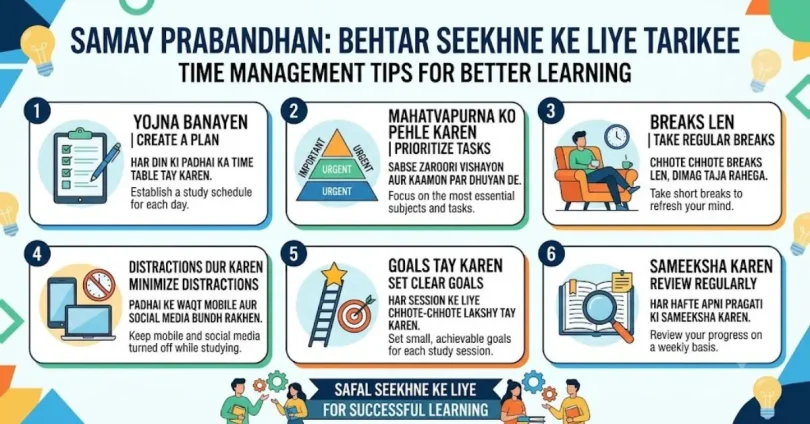
Success in learning is not only about intelligence or hard work. One of the biggest factors that separates successful students from those who constantly struggle is how effectively they manage their time. Whether you are preparing for school exams, college assignments, competitive tests, or online courses, organizing your schedule can make studying more productive and less stressful.
Many students spend long hours studying without seeing the results they expect. This often happens because they study without a clear plan, become distracted, or waste valuable time on activities that do not support their goals. Learning how to manage your time efficiently allows you to focus on the most important tasks while maintaining a healthy balance between studying, relaxation, and personal life.
These Time Management Tips for Better Learning are suitable for beginners as well as intermediate learners who want to improve their academic performance. Good time management helps you prioritize tasks, complete assignments before deadlines, reduce procrastination, and build confidence in your abilities.
The good news is that effective time management is a skill that anyone can develop with consistent practice. You do not need expensive tools or complicated systems. Simple daily habits, realistic planning, and self-discipline can significantly improve your learning experience.
In this guide, you will discover practical techniques, step-by-step strategies, common mistakes to avoid, and expert advice that will help you make the most of every study session.
What is Time Management Tips for Better Learning?

Time Management Tips for Better Learning refer to practical methods and strategies that help students use their available study time wisely. Instead of spending countless hours reading without focus, these techniques encourage planned, organized, and goal-oriented learning.
Good time management includes:
- Planning daily study sessions
- Setting realistic academic goals
- Prioritizing important tasks
- Avoiding unnecessary distractions
- Taking regular breaks
- Tracking study progress
- Maintaining consistency
For example, imagine two students preparing for the same exam. One starts studying two weeks before the test, follows a daily schedule, and reviews each subject regularly. The other waits until the last two days and studies continuously without breaks. The first student is much more likely to understand the material, remember important concepts, and feel confident during the exam.
Time management is not about studying every minute of the day. Instead, it focuses on studying smarter rather than harder.
Why is Time Management Tips for Better Learning Important?
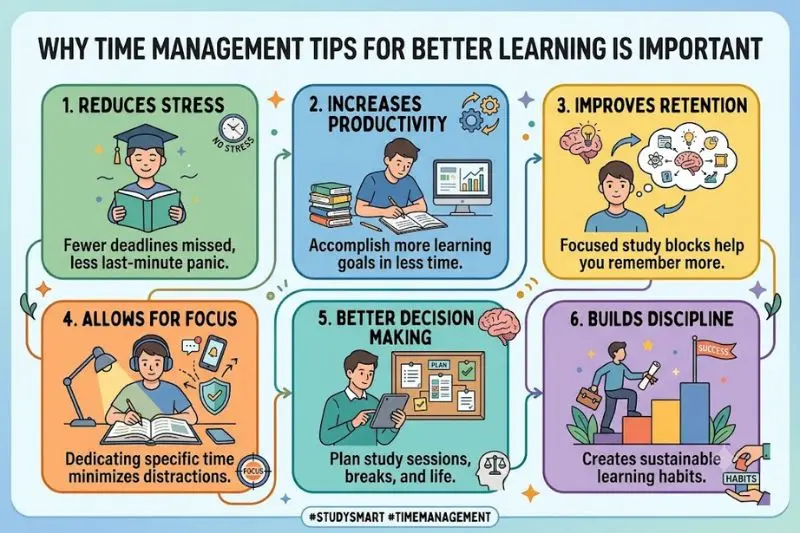
Effective time management benefits every student regardless of age or education level. It creates a structured learning routine that reduces stress and improves academic performance.
Some of the main reasons include:
Improves Productivity
Planning your day helps you accomplish more tasks in less time because you remain focused on your priorities.
Reduces Procrastination
A clear schedule minimizes the temptation to postpone assignments until the last minute.
Enhances Learning Quality
Studying consistently over several days allows your brain to absorb and retain information more effectively than last-minute cramming.
Lowers Stress Levels
Knowing what needs to be done each day prevents panic before exams and assignment deadlines.
Creates Better Study Habits
Consistent routines eventually become automatic, making learning easier and more enjoyable.
Improves Work-Life Balance
Students who manage their time effectively can enjoy hobbies, exercise, family activities, and proper rest without sacrificing academic performance.
Detailed Step-by-Step Guide
Step 1: Set Clear Learning Goals
Before opening your books, decide exactly what you want to accomplish.
Examples include:
- Complete two mathematics chapters.
- Memorize twenty vocabulary words.
- Solve fifteen practice questions.
- Finish one research assignment.
Clear goals provide direction and make your study sessions more productive.
SMART goals work especially well because they are:
- Specific
- Measurable
- Achievable
- Relevant
- Time-bound
Instead of saying, “I’ll study science,” say, “I’ll complete Chapter 6 and answer all review questions in one hour.”
Step 2: Create a Weekly Study Schedule
A study schedule helps you allocate enough time for each subject without feeling overwhelmed.
When preparing your timetable:
- List all subjects.
- Identify upcoming deadlines.
- Assign study hours based on difficulty.
- Include revision sessions.
- Reserve time for breaks.
- Leave flexibility for unexpected tasks.
For example:
Monday
- Math – 1 hour
- English – 45 minutes
- Science revision – 30 minutes
Tuesday
- History – 1 hour
- Biology – 45 minutes
- Practice questions – 30 minutes
Following a consistent schedule reduces decision fatigue and builds discipline.
Step 3: Prioritize Important Tasks
Not every task deserves equal attention.
A useful approach is dividing tasks into four categories:
High Priority
These tasks require immediate attention.
Examples:
- Tomorrow’s exam
- Assignment due today
- Project presentation
Important but Not Urgent
These should be planned before they become emergencies.
Examples:
- Weekly revision
- Reading upcoming chapters
- Long-term projects
Low Priority
Tasks that can wait without affecting your learning significantly.
Examples:
- Organizing notes
- Rearranging folders
Unnecessary Activities
Avoid activities that consume valuable study time.
Examples include:
- Endless social media scrolling
- Watching random videos
- Playing games for hours
Prioritizing wisely allows you to complete meaningful work before spending time on less important activities.
Step 4: Break Large Tasks into Smaller Parts
Many students procrastinate because assignments seem too large.
Instead of writing:
“Finish entire history project.”
Break it into manageable tasks:
- Research information
- Collect images
- Write introduction
- Write main sections
- Edit content
- Proofread
- Submit project
Completing smaller tasks provides a sense of achievement and keeps motivation high.
Step 5: Use the Pomodoro Technique
One of the most effective Time Management Tips for Better Learning is the Pomodoro Technique.
Here’s how it works:
- Study for 25 minutes.
- Take a 5-minute break.
- Repeat four times.
- Take a longer break of 20–30 minutes.
This method prevents mental fatigue while improving concentration throughout the day.
Many students notice that short, focused study sessions are much more productive than several hours of distracted studying.
Step 6: Eliminate Distractions
Distractions are one of the biggest enemies of productive learning.
Common distractions include:
- Mobile phone notifications
- Social media
- Television
- Background conversations
- Gaming
- Unnecessary internet browsing
To stay focused:
- Keep your phone on silent mode.
- Study in a quiet environment.
- Close unrelated browser tabs.
- Inform family members about your study time.
- Keep only necessary books on your desk.
Even eliminating small distractions can significantly improve concentration and learning efficiency.
Step 7: Track Your Daily Progress
Monitoring your progress helps you stay motivated and identify areas that need improvement.
A simple study tracker might include:
| Task | Status |
|---|---|
| Mathematics Practice | Completed |
| English Essay | Completed |
| Science Revision | In Progress |
| History Reading | Pending |
Review your progress at the end of each day and adjust your schedule if needed. This habit encourages consistency and keeps you accountable for your learning goals.
Step 8: Review Your Learning Regularly
Studying a topic once is rarely enough to remember it for a long time. Regular revision strengthens your understanding and improves long-term memory.
A simple revision schedule could look like this:
- Review the lesson on the same day you learn it.
- Revise again after two days.
- Review at the end of the week.
- Conduct a monthly revision before exams.
For example, if you study algebra on Monday, spend 15–20 minutes reviewing it on Wednesday and again over the weekend. This approach reinforces your knowledge and reduces the need for last-minute cramming.
Step 9: Take Care of Your Health
Good time management is not only about creating schedules. Your physical and mental well-being also affect how effectively you learn.
Healthy habits that support better learning include:
- Sleeping for 7–9 hours each night
- Drinking enough water
- Eating balanced meals
- Exercising regularly
- Taking short breaks between study sessions
A healthy body supports a focused mind. When you feel energetic, you can concentrate for longer periods and absorb information more effectively.
Step 10: Stay Consistent
The final and perhaps most important step is consistency.
Studying for one hour every day is generally more effective than studying for eight hours only once a week. Small, regular efforts build strong habits and reduce stress before exams.
Even if you miss a study session, avoid giving up entirely. Return to your schedule the next day and continue working toward your goals.
Benefits of Time Management Tips for Better Learning
Using effective time management techniques offers numerous advantages for students.
- Improves concentration during study sessions
- Increases productivity and efficiency
- Reduces academic stress
- Helps complete assignments before deadlines
- Encourages consistent study habits
- Improves exam preparation
- Builds self-confidence
- Creates a better balance between study and personal life
- Enhances memory through regular revision
- Provides more free time for hobbies and relaxation
- Reduces procrastination
- Helps achieve better academic results
Disadvantages / Risks
Although time management has many benefits, there are some challenges if it is applied incorrectly.
- Creating unrealistic schedules can lead to frustration.
- Studying without breaks may cause mental exhaustion.
- Overplanning may reduce flexibility.
- Ignoring personal health can decrease productivity.
- Trying to complete too many tasks at once can lower the quality of learning.
- Constantly changing study plans may prevent consistency.
The key is to create a realistic plan that fits your lifestyle and learning needs
Common Mistakes to Avoid
Many students understand the importance of managing time but still make mistakes that limit their progress.
Setting Unrealistic Goals
Trying to study every subject for several hours each day often leads to burnout. Set achievable goals that you can maintain consistently.
Ignoring Breaks
Continuous studying without rest reduces concentration and memory retention. Short breaks help refresh your mind.
Multitasking
Watching videos, chatting with friends, and studying simultaneously divides your attention. Focus on one task at a time for better results.
Leaving Everything Until the Last Minute
Procrastination creates unnecessary stress and limits the time available for understanding concepts properly.
Not Reviewing Lessons
Learning new material without reviewing previous topics causes students to forget important information over time.
Poor Sleep Habits
Late-night studying may seem productive, but insufficient sleep affects concentration, memory, and decision-making.
Lack of Planning
Starting each day without a study plan often results in wasted time and unfinished work.
FAQs
Why is time management important for students?
Time management helps students organize their study sessions, complete assignments on time, reduce stress, and improve academic performance. It also creates a healthy balance between learning and personal activities
What is the best study schedule?
The best schedule depends on your lifestyle and learning style. Most students benefit from studying at the same time each day, dividing subjects into manageable sessions, and including regular breaks and revision periods.
How can I stop procrastinating?
Start with small tasks instead of waiting for motivation. Break large assignments into smaller steps, set deadlines, remove distractions, and reward yourself after completing important tasks.
How many hours should I study daily?
There is no universal answer. Quality matters more than quantity. Focused study sessions of two to four hours each day, depending on your educational level and workload, are often more effective than long, distracted sessions.
Does taking breaks improve learning?
Yes. Short breaks help your brain recover, maintain concentration, and improve memory. Techniques like the Pomodoro Method are popular because they combine focused work with regular rest periods
Can good time management reduce exam stress?
Absolutely. When students prepare consistently over several weeks, they avoid last-minute cramming and feel more confident during exams.
What tools can help with time management?
Many students use planners, calendars, notebooks, to-do lists, alarms, and study timers to organize their daily tasks and monitor progress.
Expert Tips & Bonus Points
Want to make your study routine even more effective? Consider these expert recommendations:
- Study during the time of day when you feel most alert.
- Begin each session with the most difficult subject.
- Keep your study area clean and organized.
- Turn off unnecessary notifications before studying.
- Review your goals every Sunday and prepare your weekly schedule.
- Celebrate small achievements to stay motivated.
- Avoid comparing your study routine with others.
- Practice active learning by solving problems instead of only reading.
- Keep a notebook for quick revision notes.
- Stay patient because strong study habits develop gradually.
Bonus Tip
Remember the 80/20 Rule, also known as the Pareto Principle. Often, about 20% of your study efforts produce 80% of your results. Identify the topics, concepts, and activities that contribute the most to your success and prioritize them.
Conclusion
Learning effectively is not about studying longer—it is about studying smarter. By applying these Time Management Tips for Better Learning, students can transform their daily routines into productive and enjoyable learning experiences. Careful planning, realistic goal setting, regular revision, and consistent practice all contribute to stronger academic performance and greater confidence.
Time management is a skill that develops over time. You do not need to make dramatic changes overnight. Instead, start with one or two strategies, such as creating a weekly study schedule or using the Pomodoro Technique, and gradually build better habits. Small improvements made consistently often lead to remarkable long-term results.
It is equally important to maintain a healthy balance between studying and personal well-being. Adequate sleep, nutritious meals, physical activity, and regular breaks are essential for keeping your mind sharp and motivated. Remember that success is not measured by the number of hours you spend studying but by how effectively you use those hours.
Whether you are preparing for school exams, university courses, or professional certifications, effective time management can help you stay organized, reduce stress, and achieve your academic goals. By following the practical strategies outlined in this guide and remaining committed to continuous improvement, you can make every study session more meaningful and productive while building habits that benefit you throughout your educational journey and beyond.