
Introduction
In today’s fast-changing world, learning has become an essential skill rather than something limited to classrooms or schools. Whether you are preparing for exams, learning a new language, building professional skills, or simply exploring a personal interest, the ability to learn effectively can make a significant difference in your success. However, many people still rely on traditional study habits such as rereading textbooks, highlighting entire pages, or memorizing information without truly understanding it. While these methods may seem familiar, they often lead to short-term memory rather than lasting knowledge.
Modern educational research has shown that learning is most effective when students become active participants in the learning process. Instead of passively reading information or listening to lectures, successful learners interact with the material, ask questions, solve problems, explain concepts, and regularly test their understanding. These simple but powerful techniques encourage the brain to process information more deeply, making it easier to understand, remember, and apply in real-life situations.
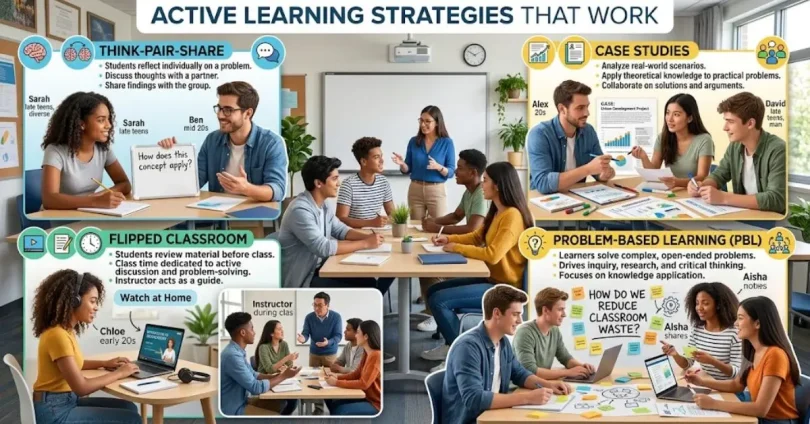
This is exactly why active learning strategies that work have become increasingly popular among educators, students, and professionals around the world. These strategies shift the focus from simply receiving information to actively engaging with it. Rather than treating learning as a one-way process, active learning transforms it into an interactive experience where curiosity, critical thinking, and practical application play central roles. As a result, learners become more confident, motivated, and capable of retaining information for much longer.
One of the biggest misconceptions about studying is that spending more hours with books automatically leads to better results. In reality, the quality of your study methods matters far more than the amount of time you spend studying. A student who studies actively for one focused hour may learn more than someone who spends three hours passively reading the same chapter repeatedly. Active learning encourages efficiency by helping learners identify what they know, discover what they still need to improve, and reinforce important concepts through regular practice.
Another reason why active learning has gained widespread recognition is its ability to improve memory retention. Our brains naturally remember information better when we actively retrieve it instead of simply reviewing it over and over again. For example, trying to recall a definition from memory, solving practice questions, or explaining a lesson to someone else forces the brain to strengthen neural connections. These stronger connections make information easier to retrieve during exams, presentations, interviews, or everyday conversations.
Active learning also develops critical thinking skills, which are becoming increasingly valuable in both education and the workplace. Instead of accepting facts without question, active learners analyze information, compare different ideas, evaluate evidence, and solve problems independently. These abilities help individuals become better decision-makers, creative thinkers, and effective communicators. Whether you’re working on a science project, writing an essay, solving mathematical problems, or making business decisions, active learning encourages deeper understanding rather than surface-level memorization.
Furthermore, these learning strategies are not limited to students alone. Professionals preparing for certification exams, employees learning new workplace technologies, entrepreneurs developing business skills, and lifelong learners pursuing personal growth can all benefit from active learning methods. Regardless of age or educational background, anyone can improve their learning efficiency by replacing passive habits with more engaging and interactive techniques.
One of the greatest strengths of active learning is its flexibility. There is no single method that works for everyone, and learners can choose techniques that best match their goals, preferences, and subjects. Some people learn best by creating mind maps, while others prefer solving practice questions, using flashcards, joining study groups, teaching concepts to friends, or writing summaries in their own words. Combining multiple techniques often produces even better results because it allows learners to approach the same information from different perspectives.
Technology has also made active learning easier than ever before. Educational apps, digital flashcards, online quizzes, interactive videos, virtual classrooms, and collaborative learning platforms provide countless opportunities to participate actively in the learning process. Instead of simply watching educational videos, learners can pause to answer questions, complete exercises, or explain concepts aloud. These small actions transform passive content into meaningful learning experiences.
Despite its many advantages, active learning does require commitment and consistency. At first, it may seem more challenging than simply reading a textbook because it demands greater mental effort. However, this extra effort is exactly what makes the learning process more effective. Every time you recall information, solve a problem, or explain a concept, your brain strengthens its understanding and stores the information more securely. Over time, these small improvements lead to significant gains in knowledge, confidence, and academic performance.
The good news is that you don’t need expensive courses, advanced technology, or exceptional intelligence to become an active learner. All you need is the willingness to engage with your study material in a more thoughtful and purposeful way. Even small changes—such as asking questions while reading, testing yourself after each chapter, or reviewing material at regular intervals—can dramatically improve your learning outcomes.
In this comprehensive guide, you will discover the most effective active learning strategies that work, understand why they are supported by educational research, and learn how to apply them step by step in your daily study routine. You’ll also explore their benefits, potential challenges, common mistakes to avoid, answers to frequently asked questions, and practical expert tips that can help you study smarter instead of harder. By the end of this guide, you’ll have the knowledge and confidence to transform the way you learn and achieve better results in school, college, professional development, and lifelong learning.
What is Active Learning?
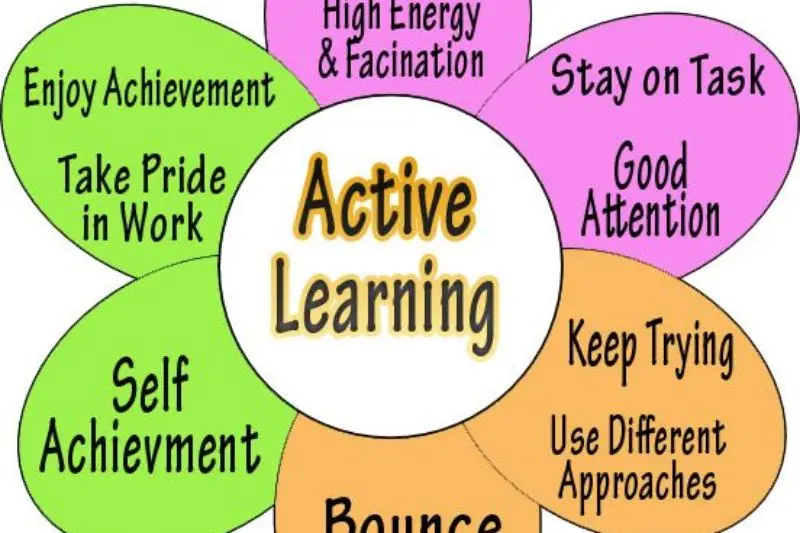
Active learning is an educational approach where learners actively participate in understanding and applying knowledge instead of passively reading or listening.
Rather than memorizing facts, active learners:
- Ask meaningful questions
- Solve problems
- Discuss concepts
- Practice recalling information
- Teach others
- Connect ideas to real-life situations
- Reflect on what they have learned
For example, instead of reading a chapter three times, an active learner may:
- Summarize it in their own words
- Create flashcards
- Solve practice questions
- Explain the topic to a friend
- Draw a concept map
These activities require the brain to process information deeply, making learning more effective.—
Why is Active Learning Important?
Active learning has become one of the most recommended learning methods because it helps learners understand information rather than simply memorize it.
Here are several reasons why it is important:
Improves Long-Term Memory
When learners actively interact with information, the brain creates stronger connections, making it easier to remember concepts for longer periods.
Encourages Critical Thinking
Instead of accepting information at face value, learners analyze, compare, evaluate, and solve problems independently.
Increases Engagement
Interactive learning keeps students focused and reduces boredom during study sessions.
Builds Confidence
Practicing and applying knowledge regularly helps learners become more confident during exams, presentations, and discussions.
Develops Problem-Solving Skills
Many active learning activities involve analyzing real-world situations and finding practical solutions.
Makes Learning Enjoyable
Interactive activities are often more enjoyable than passive reading, making students more motivated to continue learning.
Detailed Step-by-Step Guide
Step 1: Set Clear Learning Goals
Every study session should begin with a clear objective.
Instead of saying:
“I’ll study biology.”
Say:
“I’ll understand how photosynthesis works and explain it without notes.”
Specific goals help maintain focus and measure progress.
Step 2: Preview the Material
Before reading deeply:
- Look at headings
- Review diagrams
- Read summaries
- Check key vocabulary
- Predict what you’ll learn
This prepares your brain to absorb new information more effectively.
Example:
Before reading a history chapter, examine the timeline and chapter headings first.
Step 3: Ask Questions Before Reading
Curiosity activates learning.
Ask questions like:
- What is this topic about?
- Why is it important?
- How does it work?
- What problem does it solve?
- How does it connect with previous lessons?
Reading becomes more purposeful when you’re searching for answers.
Step 4: Take Effective Notes
Avoid copying every sentence.
Instead:
- Write key ideas
- Use bullet points
- Highlight relationships
- Draw diagrams
- Add your own explanations
Organized notes improve revision later.
Step 5: Use Active Recall
Active recall is one of the most effective active learning strategies that work.
Instead of rereading notes repeatedly:
- Close the book.
- Try to remember everything.
- Write it from memory.
- Check your answers.
This strengthens memory far more than passive review.
Example
After studying a chapter, write down every concept you remember before checking your notes.
Step 6: Practice Retrieval Frequently
Testing yourself is learning.
Use:
- Practice quizzes
- Flashcards
- Mock exams
- Question banks
- Self-made tests
Retrieval strengthens memory pathways and reveals weak areas.
Step 7: Explain Concepts to Someone Else
Teaching forces your brain to organize information logically.
You can explain concepts to:
- Friends
- Family members
- Study partners
- Yourself in front of a mirror
If you struggle to explain something simply, you probably need more practice.
Step 8: Create Mind Maps
Mind maps organize information visually.
Start with the main topic.
Then connect:
- Main ideas
- Subtopics
- Definitions
- Examples
- Relationships
This improves understanding and helps learners see the “big picture.”
Step 9: Solve Real Problems
Knowledge becomes meaningful when applied.
Instead of memorizing formulas:
- Solve exercises
- Analyze case studies
- Complete projects
- Work on practical assignments
Application strengthens learning.
Step 10: Discuss Ideas
Study groups can be highly effective when managed properly.
Discuss:
- Difficult concepts
- Different viewpoints
- Practice questions
- Real-world examples
Hearing different explanations often improves understanding.
Step 11: Space Your Learning
Don’t study everything in one sitting.
Instead:
Day 1: Learn
Day 2: Review
Day 4: Practice
Day 7: Test yourself
Day 14: Review again
Spaced repetition dramatically improves long-term retention
Step 12: Reflect After Every Study Session
Spend five minutes asking:
- What did I learn?
- What confused me?
- What should I review tomorrow?
- How can I improve?
Reflection helps learners become more aware of their progress.
Benefits of Active Learning Strategies That Work

Using active learning consistently offers many advantages.
- Improves long-term memory
- Increases concentration
- Boosts motivation
- Encourages independent learning
- Strengthens critical thinking
- Improves classroom participation
- Makes studying more enjoyable
- Develops communication skills
- Increases confidence during exams
- Helps learners apply knowledge practically
- Reduces passive memorization
- Improves academic performance
- Supports lifelong learning
- Makes revision faster
- Encourages curiosity and creativity
Disadvantages / Risks
Although active learning is highly effective, it also comes with some challenges.
- Takes more effort than passive reading
- May feel uncomfortable initially
- Requires consistency
- Group discussions can become distracting
- Beginners may find self-testing difficult
- Creating notes and mind maps takes time
- Some learners give up before seeing results
- Requires discipline and planning
Fortunately, these challenges become easier with regular practice.
Common Mistakes to Avoid
Many learners unknowingly reduce the effectiveness of active learning.
Reading Without Thinking
Simply reading pages repeatedly rarely improves understanding.
Instead, ask questions and summarize concepts.
Highlighting Everything
Highlighting entire pages defeats the purpose.
Highlight only key ideas.
Skipping Practice Questions
Understanding theory alone is not enough.
Always test your knowledge.
Cramming Before Exams
Studying everything in one night leads to poor retention.
Use spaced learning instead.
Memorizing Without Understanding
Focus on understanding concepts before memorizing facts.
Studying Without Goals
Clear objectives improve concentration and productivity.
Avoiding Difficult Topics
Weak areas deserve more attention, not less.
Challenge yourself regularly.
Never Reviewing Old Material
Memory fades without revision.
Schedule regular reviews throughout the semester.
FAQs
What are active learning strategies?
Active learning strategies are study methods that require learners to participate actively by solving problems, asking questions, discussing ideas, practicing recall, and applying knowledge instead of passively reading or listening.
Are active learning techniques suitable for beginners?
Yes.
Beginners often benefit the most because these methods improve understanding from the beginning rather than encouraging memorization.
Starting with simple techniques like summarizing lessons and self-quizzing can produce noticeable improvements.
How often should I use active learning?
Ideally, every study session should include active learning activities.
Even spending 15–20 minutes on self-testing or explaining concepts can improve retention significantly.
Does active learning improve exam performance?
Yes.
Students who regularly practice active recall, spaced repetition, and problem-solving generally perform better because they remember information more accurately under exam conditions.
Can active learning be used for online courses?
Absolutely.
Online learners can:
Take notes
Pause videos
Answer questions
Complete exercises
Join discussions
Teach concepts to others
These methods make online learning far more effective.
Which active learning strategy is the most effective?
here isn’t one perfect strategy for everyone.
However, many education experts recommend combining:
Active recall
Spaced repetition
Practice questions
Teaching others
Reflection
Together, these methods create a powerful learning sy
Expert Tips & Bonus Points
Experienced educators recommend combining multiple techniques instead of relying on only one.
Here are some practical tips:
- Study in focused sessions of 25–50 minutes.
- Review difficult topics first when your energy is highest.
- Write summaries in your own words.
- Create flashcards for important definitions.
- Solve problems before checking solutions.
- Teach every major concept to another person.
- Keep a mistake notebook to avoid repeating errors.
- Mix different subjects during revision to strengthen understanding.
- Track your weekly progress.
- Celebrate small improvements to stay motivated.
- Reduce distractions by keeping your phone away while studying.
- Review material within 24 hours after learning it.
Remember that consistency matters more than perfection.
Even small daily improvements produce remarkable long-term results.
Conclusion
Learning is one of the most valuable lifelong skills, but the way we learn often determines the results we achieve. Simply spending long hours reading textbooks or memorizing facts is no longer enough in today’s fast-paced educational and professional environments. To truly understand, retain, and apply knowledge, learners need methods that actively engage their minds. This is why active learning strategies that work have become an essential part of successful studying for students, professionals, and lifelong learners alike.
Throughout this guide, we explored how active learning shifts the focus from passive reading to meaningful participation. Techniques such as active recall, self-testing, spaced repetition, note-taking, teaching others, solving real-world problems, and reflecting on learning help strengthen memory, improve critical thinking, and build confidence. Instead of relying on short-term memorization, these strategies encourage deeper understanding that lasts well beyond exams or assignments.
One of the greatest advantages of active learning is that it can be adapted to virtually any subject or learning style. Whether you’re studying mathematics, science, history, languages, business, or technical skills, the principles remain the same: interact with the material, ask thoughtful questions, practice regularly, and apply what you’ve learned. You don’t need expensive resources or advanced technology to get started. A notebook, a few practice questions, flashcards, and a willingness to engage with the material are often enough to transform your learning experience.
It’s also important to remember that active learning is not about being perfect from the very beginning. Many learners initially find these methods more challenging than simply rereading notes because they require greater mental effort. However, that effort is exactly what strengthens understanding and improves long-term memory. Every time you test yourself, explain a concept in your own words, or solve a difficult problem, you are training your brain to retain information more effectively. Over weeks and months, these small, consistent efforts lead to significant improvements in academic performance, productivity, and self-confidence.
Consistency is the key to success. Rather than trying to master every learning strategy at once, start with one or two techniques that suit your current goals. For example, you might begin by using active recall after each study session or by reviewing material through spaced repetition every few days. As these habits become part of your routine, gradually incorporate additional methods such as mind mapping, peer discussions, or teaching concepts to others. Small improvements practiced consistently will always produce better long-term results than occasional bursts of intense studying.
Another important lesson is that effective learning goes beyond earning good grades. The skills developed through active learning—critical thinking, communication, problem-solving, creativity, and independent decision-making—are valuable throughout life. These abilities can help you perform better in higher education, succeed in your career, adapt to changing technologies, and continue learning new skills in an ever-evolving world. Active learning doesn’t just prepare you for your next exam; it prepares you for lifelong growth and continuous improvement.
As you move forward, remember that every study session is an opportunity to learn more effectively. Stay curious, ask questions, challenge yourself, and don’t be discouraged by mistakes. Mistakes are often the moments when the deepest learning takes place. By applying the active learning strategies that work discussed in this guide, you’ll be able to study smarter, remember more, and gain the confidence to tackle new challenges with greater ease.
Ultimately, successful learning is not measured by how many hours you spend studying but by how well you understand and use what you’ve learned. Make active learning a daily habit, remain consistent with your efforts, and embrace every opportunity to improve. Over time, you’ll discover that learning becomes not only more productive but also far more enjoyable, rewarding, and empowering.