
Introduction
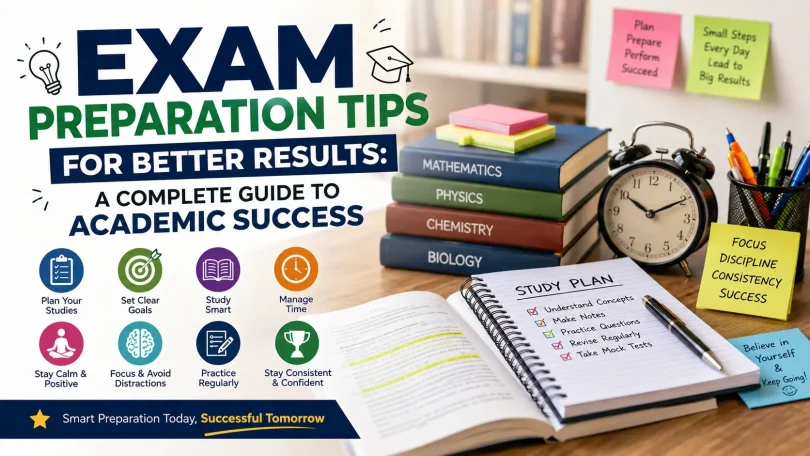
Preparing for exams can feel overwhelming, especially when multiple subjects, deadlines, and personal responsibilities compete for your attention. However, success in exams is not determined by luck or last-minute cramming. Instead, it comes from consistent effort, smart planning, and effective study habits. By following the right exam preparation tips for better results, students can improve their understanding, retain information longer, and approach exams with confidence.
Whether you are preparing for school tests, college examinations, competitive exams, or professional certifications, having a structured study plan makes a significant difference. Good preparation not only improves academic performance but also reduces stress and increases self-confidence. Even students who struggle with certain subjects can achieve better grades by using proven learning techniques and maintaining a disciplined routine.
This comprehensive guide covers practical exam preparation tips for better results that are easy to implement. From setting realistic goals and creating study schedules to managing stress and avoiding common mistakes, you’ll learn everything needed to prepare effectively. By applying these strategies consistently, you can maximize your learning potential and perform at your best on exam day.
What Are Exam Preparation Tips for Better Results?

Exam preparation tips for better results are practical strategies and study techniques that help students learn efficiently, manage their time wisely, and perform well during examinations.
These tips go beyond simply reading textbooks. They include planning study sessions, practicing previous exam questions, taking effective notes, improving concentration, maintaining healthy habits, and developing confidence before the exam.
Effective exam preparation focuses on understanding concepts instead of memorizing information blindly. When students understand the subject, they can apply their knowledge to different types of questions with greater confidence.
Successful exam preparation usually involves:
- Creating a realistic study timetable
- Setting daily learning goals
- Reviewing notes regularly
- Practicing mock tests
- Managing stress effectively
- Getting enough sleep and exercise
- Maintaining a positive mindset
Following these habits consistently helps students improve both academic performance and overall learning skills.
Why Are Exam Preparation Tips for Better Results Important?

Good preparation is essential because it allows students to study smarter instead of harder. Rather than feeling overwhelmed before exams, students who prepare early remain organized and confident.
Some key reasons why effective exam preparation matters include:
- Improves understanding of difficult topics
- Reduces exam anxiety and stress
- Increases confidence during examinations
- Enhances memory retention
- Helps manage study time efficiently
- Improves overall academic performance
- Encourages consistent learning habits
- Reduces the need for last-minute cramming
Strong preparation also develops valuable life skills such as discipline, organization, problem-solving, and time management, which benefit students beyond academics.
Step-by-Step Guide to Exam Preparation for Better Results
Step 1: Understand the Exam Pattern
Before beginning your preparation, learn about the exam format.
Find out:
- Number of questions
- Marking scheme
- Time limit
- Important topics
- Weightage of each section
Knowing what to expect helps you study strategically instead of wasting time on less important areas.
Step 2: Create a Study Schedule
A study timetable keeps your preparation organized.
Your schedule should include:
- Daily study sessions
- Break times
- Revision periods
- Practice tests
- Difficult subjects during your most productive hours
Avoid unrealistic plans. Studying consistently for a few hours every day is far more effective than studying for long hours occasionally.
Step 3: Set Clear Study Goals
Large subjects become easier when divided into smaller goals.
For example:
- Finish one chapter today
- Solve twenty mathematics problems
- Memorize important formulas
- Revise biology diagrams
- Complete one mock test
Small achievements keep you motivated throughout your preparation.
Step 4: Organize Your Study Materials
Collect all necessary resources before you begin studying.
These may include:
- Textbooks
- Class notes
- Previous papers
- Practice books
- Flashcards
- Formula sheets
- Highlighters
- Sticky notes
An organized study space saves valuable time and minimizes distractions.
Step 5: Focus on Understanding Concepts
Memorizing without understanding often leads to forgetting information quickly.
Instead:
- Learn why concepts work.
- Connect ideas together.
- Explain topics in your own words.
- Teach concepts to someone else.
Deep understanding improves long-term memory and problem-solving skills.
Step 6: Practice Previous Exam Papers
Past papers provide valuable insight into question patterns.
Benefits include:
- Understanding question styles
- Improving speed
- Identifying weak areas
- Building confidence
- Learning time management
Treat practice papers like real exams by timing yourself.
Step 7: Use Active Learning Techniques
Reading repeatedly is less effective than active learning.
Try techniques such as:
- Making summary notes
- Drawing mind maps
- Creating flashcards
- Solving quizzes
- Self-testing regularly
- Explaining lessons aloud
These methods improve memory retention significantly.
Step 8: Revise Regularly
Revision strengthens memory.
A good revision strategy includes:
- Daily review
- Weekly revision
- Monthly revision
- Final revision before exams
Frequent revision reduces forgetting and reinforces important concepts.
Step 9: Improve Time Management
Time management plays a major role in exam success.
Some useful techniques include:
- Study in focused sessions
- Prioritize difficult topics
- Avoid procrastination
- Limit social media usage
- Set timers while studying
- Take short breaks
Balanced study sessions improve concentration and reduce fatigue.
Step 10: Maintain a Healthy Lifestyle
Your brain performs best when your body is healthy.
Maintain healthy habits by:
- Sleeping 7–9 hours
- Drinking enough water
- Eating balanced meals
- Exercising regularly
- Avoiding excessive caffeine
- Taking short walks between study sessions
Physical health directly influences learning ability and concentration.
Step 11: Stay Positive and Motivated
Negative thinking reduces confidence.
Stay motivated by:
- Celebrating small achievements
- Tracking progress
- Thinking positively
- Avoiding unhealthy comparisons
- Believing in consistent improvement
Confidence grows through preparation rather than wishful thinking.
Step 12: Prepare for Exam Day
The final day before your exam should focus on revision rather than learning new topics.
Remember to:
- Pack necessary materials
- Check exam timings
- Sleep early
- Eat a healthy breakfast
- Reach the examination center on time
- Stay calm during the exam
Proper preparation helps you perform at your best.
Benefits of Exam Preparation Tips for Better Results

Following effective preparation strategies offers numerous advantages.
- Improves academic performance
- Builds self-confidence
- Reduces examination stress
- Increases focus during study sessions
- Enhances memory retention
- Promotes disciplined learning habits
- Improves problem-solving abilities
- Encourages better time management
- Helps identify weak subjects early
- Reduces dependence on last-minute studying
- Improves exam writing speed
- Develops lifelong learning skills
- Creates a balanced study routine
- Increases motivation and consistency
- Leads to better overall educational outcomes
Disadvantages and Risks of Poor Exam Preparation
Ignoring proper preparation often creates unnecessary challenges.
Some common risks include:
- Increased stress and anxiety
- Poor time management
- Last-minute cramming
- Low confidence
- Difficulty remembering information
- Poor exam performance
- Lack of concentration
- Incomplete syllabus coverage
- Sleep deprivation
- Reduced motivation
- Panic during examinations
- Higher chances of making careless mistakes
Fortunately, these problems can usually be avoided through early planning and consistent study habits.
Common Mistakes to Avoid
Many students work hard but still fail to achieve their desired results because of avoidable mistakes.
Here are some of the most common ones:
1. Starting Too Late
Beginning preparation only a few days before exams increases stress and limits revision time.
2. Ignoring Difficult Subjects
Avoiding challenging topics often leads to poor overall performance. Face difficult subjects early.
3. Studying Without Breaks
Continuous studying reduces concentration and productivity.
4. Depending Only on Memorization
Understanding concepts is more valuable than memorizing facts.
5. Skipping Revision
Without revision, information is easily forgotten.
6. Poor Sleep Habits
Late-night studying can reduce concentration and memory.
7. Excessive Phone Usage
Social media distractions reduce study efficiency.
8. Not Solving Practice Papers
Practice improves confidence, speed, and familiarity with exam patterns.
9. Comparing Yourself with Others
Focus on personal improvement instead of unhealthy competition.
10. Ignoring Physical Health
Poor nutrition, lack of exercise, and insufficient sleep negatively affect learning.
When should I start preparing for exams?
Ideally, preparation should begin several weeks or months before the examination. Early preparation provides enough time for learning, revision, and practice.
How many hours should I study daily?
Quality matters more than quantity. Most students benefit from two to six focused study hours each day, depending on their academic level and upcoming exams.
Is studying at night better than studying in the morning?
It depends on personal preference. Some students concentrate better in the morning, while others perform well at night. Choose the time when your focus is strongest.
How can I remember information for longer?
Use active recall, regular revision, practice questions, and spaced repetition instead of reading the same material repeatedly.
Should I study every subject every day?
Not necessarily. However, your study plan should ensure that every subject receives enough attention throughout the week, especially weaker areas.
Are mock exams really helpful?
Yes. Mock exams improve confidence, identify weak areas, increase speed, and prepare students for the real examination environment.
How can I stay motivated during long study sessions?
Set small goals, reward yourself after completing tasks, take short breaks, and remind yourself of your long-term academic goals.
What should I do if I feel stressed before exams?
Take deep breaths, review your preparation, avoid panic, maintain healthy routines, and focus on one task at a time instead of worrying about the entire exam.
Expert Tips and Bonus Points
Students who consistently perform well often follow simple but effective habits.
Consider these expert recommendations:
- Begin preparation as early as possible.
- Prioritize understanding over memorization.
- Review notes within twenty-four hours of each class.
- Use color-coded notes for important concepts.
- Practice writing answers instead of only reading them.
- Study difficult subjects when your energy level is highest.
- Keep your study area clean and distraction-free.
- Turn off unnecessary notifications while studying.
- Stay hydrated throughout the day.
- Use a planner to track your progress.
- Revise formulas, definitions, and key points regularly.
- Take short breaks every fifty to sixty minutes.
- Maintain a positive attitude even after making mistakes.
- Learn from previous exam experiences.
- Believe that consistent effort always produces better results than last-minute cramming.
Conclusion
Achieving academic success is not about studying endlessly or relying on natural talent. It is the result of smart planning, disciplined effort, and consistent practice. By following effective exam preparation tips for better results, students can improve their understanding, strengthen memory, and approach examinations with greater confidence. Small daily improvements eventually lead to significant academic achievements.
Remember that every student learns differently. Experiment with various study methods until you discover what works best for you. Build a realistic timetable, revise regularly, solve practice papers, and maintain healthy habits throughout your preparation. At the same time, avoid common mistakes such as procrastination, excessive memorization, and poor time management.
Exams measure your knowledge at a particular moment, but the habits you develop while preparing can benefit you for a lifetime. Skills such as organization, discipline, critical thinking, and perseverance remain valuable in higher education, professional careers, and personal growth.
Most importantly, believe in your ability to improve through consistent effort. Progress may seem slow at first, but every focused study session brings you one step closer to your goals. Stay committed, remain positive, and continue learning with confidence. With the right mindset and effective preparation strategies, you can achieve better results and unlock your full academic potential.