

Introduction
Success rarely happens by accident. Behind every accomplished entrepreneur, athlete, student, or professional is a clear vision supported by meaningful goals. While talent and opportunity certainly matter, knowing how to set and achieve goals often makes the biggest difference. Effective goal setting strategies for success help people stay focused, motivated, and accountable throughout their journey.
Whether you want to improve your career, grow your business, earn better grades, develop healthier habits, or achieve financial stability, setting the right goals gives your efforts direction. Instead of feeling overwhelmed by large ambitions, you can break them into manageable milestones that make progress easier to track.
Many people begin with enthusiasm but lose motivation because their goals are unrealistic, unclear, or poorly planned. Fortunately, successful goal setting is a skill that anyone can learn. By using practical techniques, reviewing progress regularly, and staying flexible when circumstances change, you can dramatically improve your chances of success.
This guide explores everything beginners and intermediate learners need to know about goal setting strategies for success. You’ll learn what goal setting means, why it matters, how to create achievable objectives, common mistakes to avoid, and expert techniques that can help you stay committed until you reach your desired results.
What Are Goal Setting Strategies for Success?
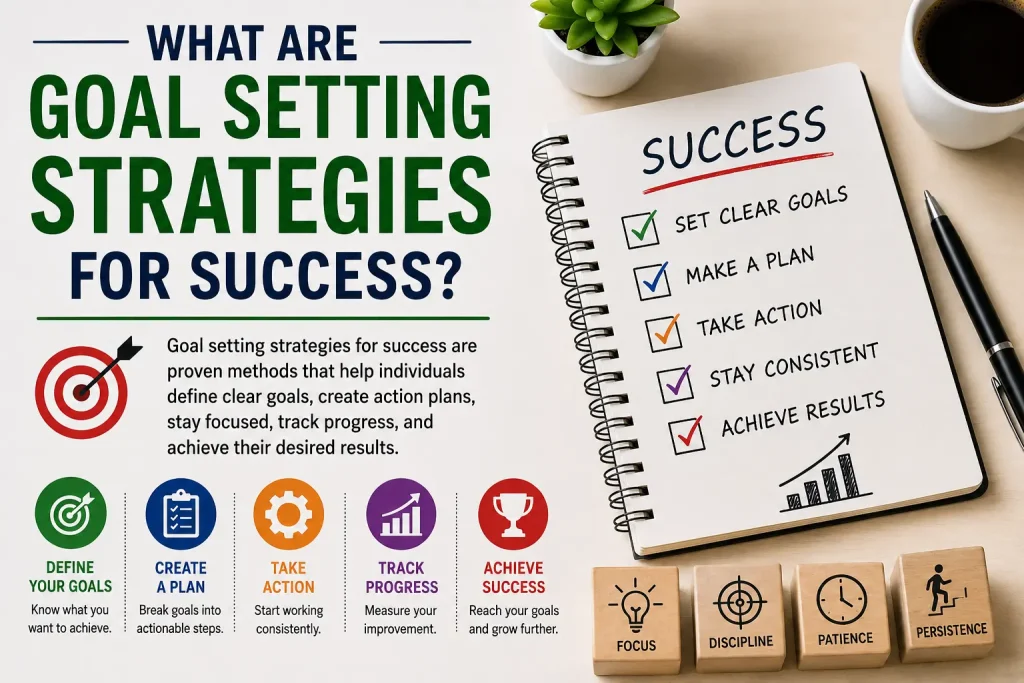
Goal setting strategies for success are structured methods used to define, organize, and achieve specific objectives. These strategies transform ideas into practical action plans by identifying what you want to accomplish and outlining the steps needed to get there.
Rather than relying on motivation alone, effective goal setting combines planning, discipline, measurement, and continuous improvement. It helps individuals prioritize important tasks while reducing distractions that delay progress.
A successful goal usually has several characteristics:
- It is clear and specific.
- It has a realistic deadline.
- Progress can be measured.
- It aligns with personal values.
- It motivates consistent action.
For example:
Instead of saying, “I want to become healthier,” a stronger goal would be:
“I will exercise for 30 minutes five days a week and lose 8 kilograms within six months.”
The second example provides clarity, measurable progress, and a timeline, making success much easier to evaluate.
Why Are Goal Setting Strategies for Success Important?
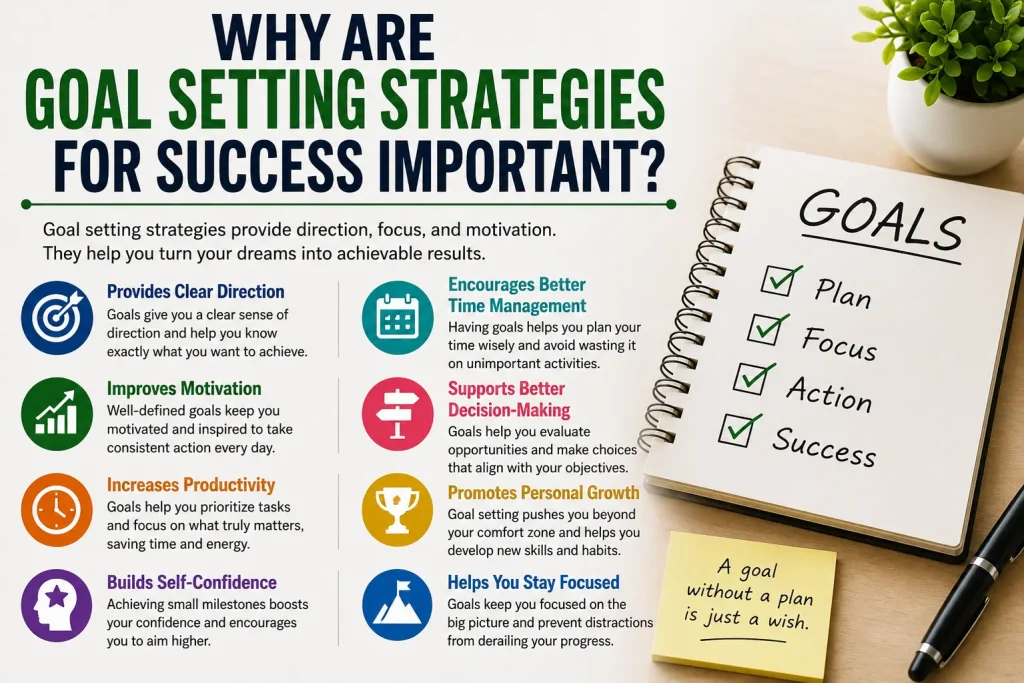
Setting goals provides direction for your daily activities. Without goals, it’s easy to become busy without making meaningful progress. Effective goal setting offers a roadmap that keeps your efforts focused on what truly matters.
Here are several reasons why goal setting is essential:
Provides Clear Direction
Goals eliminate uncertainty by giving you a clear destination. Every decision becomes easier because you know whether it supports your objective.
Improves Motivation
Each completed milestone creates a sense of achievement that encourages continued effort. Small victories build confidence over time.
Increases Productivity
People with clearly defined goals spend less time on unimportant activities. Priorities become easier to identify, allowing you to work more efficiently.
Builds Self-Confidence
Achieving even small goals demonstrates your ability to succeed. This confidence often carries over into larger challenges.
Encourages Better Time Management
Deadlines create urgency, making it easier to organize your schedule and reduce procrastination.
Supports Better Decision-Making
When opportunities arise, you can evaluate whether they align with your long-term objectives before committing your time and energy.
Promotes Continuous Improvement
Regular progress reviews reveal strengths, weaknesses, and areas that need adjustment, allowing you to improve consistently.
Step-by-Step Guide to Goal Setting Strategies for Success
Step 1: Define Your Vision
Every meaningful goal begins with a vision. Ask yourself what kind of life, career, business, or personal development you want in the future.
Consider questions such as:
- Where do I want to be in five years?
- What achievements would make me proud?
- Which areas of my life need improvement?
- What truly motivates me?
Writing your answers helps clarify your long-term direction.
Step 2: Identify Specific Goals
Once your vision is clear, convert it into specific objectives.
Instead of vague goals like:
- Earn more money
- Get fit
- Become successful
Create goals like:
- Increase monthly income by 25% within one year.
- Complete a half marathon in eight months.
- Save $10,000 by the end of next year.
Specific goals are easier to pursue because they eliminate uncertainty.
Step 3: Use the SMART Goal Framework
One of the most effective goal setting strategies for success is the SMART framework.
Your goals should be:
Specific
Clearly define what you want.
Measurable
Track progress using numbers or milestones.
Achievable
Set realistic expectations based on your current resources and abilities.
Relevant
Ensure the goal aligns with your overall priorities.
Time-Bound
Include a deadline to maintain urgency and accountability.
Example:
“I will complete three online professional certification courses within six months by studying one hour every weekday.”
Step 4: Break Large Goals into Smaller Tasks
Large goals often feel intimidating.
Instead of focusing on one enormous objective, divide it into manageable milestones.
For example:
Goal:
Write a book.
Smaller tasks:
- Choose a topic.
- Create an outline.
- Write 500 words daily.
- Edit each chapter.
- Proofread.
- Publish.
Each completed task builds momentum toward the larger objective.
Step 5: Create an Action Plan
Goals remain dreams without action.
Your action plan should answer:
- What needs to be done?
- When will it be done?
- What resources are required?
- Who can help?
Scheduling important tasks in your calendar increases commitment.
Step 6: Prioritize High-Impact Activities
Not every task contributes equally to success.
Focus first on activities that produce the greatest results.
For example, if your goal is career advancement, spending time improving professional skills may provide better returns than constantly checking emails.
Ask yourself daily:
“What is the single most important task that moves me closer to my goal?”
Step 7: Track Your Progress
Monitoring progress helps maintain motivation and identify problems before they become major obstacles.
Useful tracking methods include:
- Journals
- Mobile apps
- Progress charts
- Weekly reviews
- Monthly evaluations
Celebrate milestones, even small ones, to reinforce positive habits.
Step 8: Stay Flexible
Unexpected challenges are part of every journey.
You may need to adjust timelines, strategies, or priorities without abandoning your ultimate objective.
Flexibility helps you remain resilient instead of becoming discouraged by temporary setbacks.
Step 9: Build Positive Habits
Long-term success depends more on consistent habits than occasional bursts of motivation.
Examples include:
- Reading every morning.
- Exercising regularly.
- Planning tomorrow’s tasks each evening.
- Reviewing weekly progress.
- Limiting distractions during focused work sessions.
Small daily improvements accumulate into remarkable achievements over time.
Step 10: Review and Improve Regularly
Successful people regularly evaluate their goals.
Ask yourself:
- What worked well?
- What slowed my progress?
- Which habits need improvement?
- Are my goals still relevant?
Continuous learning ensures your strategies remain effective as your circumstances evolve.
Benefits of Goal Setting Strategies for Success
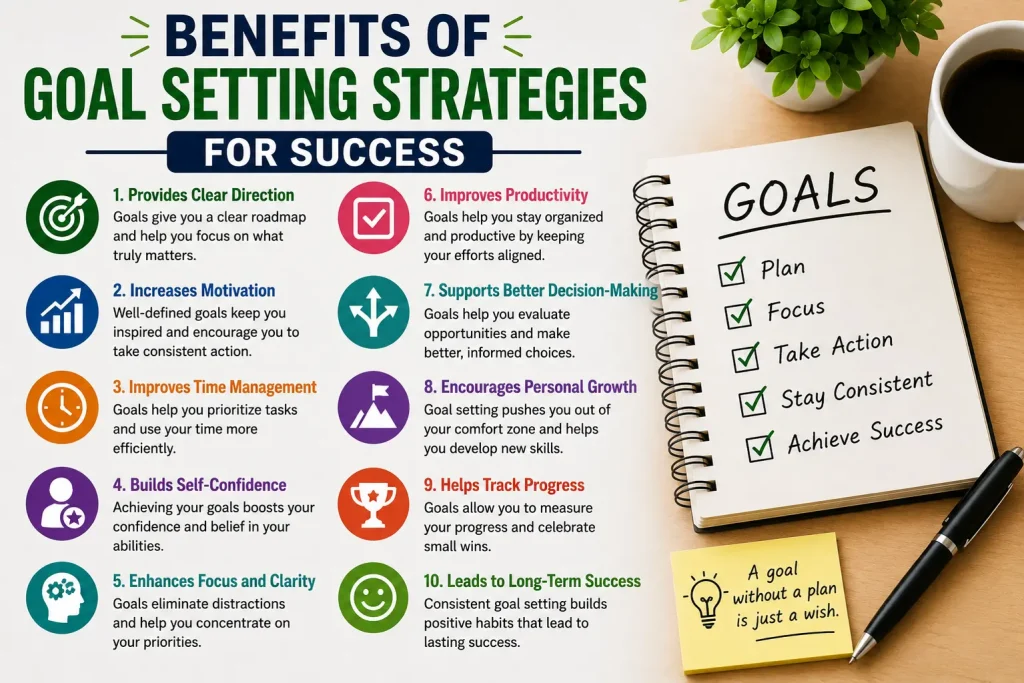
Effective goal setting provides advantages that extend beyond achieving individual objectives.
Some of the most valuable benefits include:
- Greater focus and clarity.
- Increased confidence.
- Better time management.
- Higher productivity.
- Improved decision-making.
- Stronger self-discipline.
- Reduced procrastination.
- Better work-life balance.
- Higher motivation during difficult periods.
- Measurable personal and professional growth.
- Improved financial planning.
- Enhanced career development.
- Stronger leadership skills.
- Greater resilience after setbacks.
- Long-term personal satisfaction.
Disadvantages and Risks of Goal Setting Strategies for Success
Although goal setting strategies for success offer many advantages, they are not without challenges. Being aware of these risks allows you to manage them effectively and maintain a healthy balance.
- Unrealistic expectations: Setting goals that are too ambitious can lead to disappointment and frustration.
- Fear of failure: Some people avoid taking risks because they become overly concerned about not achieving their goals.
- Burnout: Constantly chasing goals without taking breaks can affect your physical and mental well-being.
- Loss of flexibility: Focusing too rigidly on one objective may cause you to overlook better opportunities.
- Stress and pressure: Tight deadlines and high expectations can increase anxiety if not managed properly.
- Neglecting other priorities: Spending excessive time on one goal may affect relationships, health, or personal happiness.
- Reduced motivation after setbacks: Unexpected obstacles may discourage people who lack a backup plan.
The key is to create realistic goals, review them regularly, and remain flexible when circumstances change.
Common Mistakes to Avoid
Even the best plans can fail if common mistakes are ignored. Avoiding these errors will increase your chances of achieving lasting success.
Setting Vague Goals
Goals like “I want to be successful” provide no clear direction. Define exactly what success means for you.
Trying to Achieve Too Many Goals at Once
Managing several major goals simultaneously can divide your attention and reduce progress. Focus on your highest priorities first.
Ignoring Deadlines
Without a timeline, goals often remain unfinished. Set realistic deadlines and review them regularly.
Failing to Track Progress
If you never measure your results, you won’t know whether you’re moving forward or falling behind.
Depending Only on Motivation
Motivation changes from day to day. Strong habits and consistent routines are much more reliable than waiting to feel inspired.
Giving Up Too Early
Most worthwhile goals require patience. Temporary setbacks should be viewed as learning opportunities rather than permanent failures.
Not Celebrating Small Wins
Recognizing progress keeps motivation high. Celebrate milestones to maintain enthusiasm throughout your journey.
Refusing to Adjust Your Plan
Sometimes strategies need improvement. Being flexible allows you to overcome obstacles without abandoning your overall objective.
What are goal setting strategies for success?
Goal setting strategies for success are structured methods that help individuals define clear objectives, create action plans, monitor progress, and achieve desired results. These strategies improve focus, motivation, productivity, and decision-making while making large goals easier to accomplish.
Why is goal setting important for personal growth?
Goal setting provides direction and purpose. Instead of reacting to daily events, you intentionally work toward meaningful achievements. It also builds confidence, develops discipline, improves time management, and encourages continuous learning.
What is the SMART goal method?
The SMART framework helps create effective goals by ensuring they are:
Specific
Measurable
Achievable
Relevant
Time-Bound
This method increases clarity and makes progress easier to evaluate.
How often should I review my goals?
Weekly reviews help you stay focused on short-term tasks, while monthly and quarterly reviews allow you to evaluate overall progress. Annual reviews are useful for measuring long-term achievements and adjusting future plans.
What should I do if I fail to reach a goal?
Failure should be treated as feedback rather than defeat. Analyze what went wrong, identify lessons learned, revise your strategy if necessary, and continue moving forward. Many successful people reached their biggest achievements only after experiencing multiple setbacks.
Can goal setting improve career success?
Yes. Professionals who set clear career goals often improve their skills, increase productivity, and make better decisions about education, networking, and promotions. Goal setting also helps employees remain focused on long-term professional development rather than short-term distractions.
How many goals should I focus on at one time?
Most productivity experts recommend concentrating on one to three major goals at a time. This approach prevents overwhelm and allows you to devote enough energy to each objective while maintaining consistent progress.
Expert Tips and Bonus Points
If you want to maximize the effectiveness of your goal setting strategies for success, consider these expert recommendations:
- Write your goals instead of keeping them in your mind.
- Break yearly goals into monthly, weekly, and daily tasks.
- Review your progress at the same time each week.
- Use visual reminders such as planners or vision boards.
- Develop habits that support your long-term objectives.
- Learn from successful people in your field.
- Surround yourself with positive and supportive individuals.
- Reward yourself when you achieve important milestones.
- Stay patient and trust the process.
- Continue learning and improving your skills throughout your journey.
Bonus Advice
Remember that success is not measured only by reaching the final destination. The knowledge, discipline, confidence, and resilience you develop while pursuing your goals are equally valuable. Every small improvement contributes to your long-term growth.
Conclusion
Success is rarely the result of luck alone. It is usually the outcome of careful planning, consistent effort, and a willingness to learn from both achievements and setbacks. Effective goal setting strategies for success provide the structure needed to transform dreams into realistic and achievable objectives. By defining clear goals, creating practical action plans, monitoring your progress, and remaining flexible when challenges arise, you build a strong foundation for lasting personal and professional growth.
The journey toward success is unique for every individual. Some goals may be achieved quickly, while others require months or even years of dedication. What matters most is maintaining consistency and refusing to let temporary obstacles discourage you. Small daily actions, repeated over time, often produce extraordinary results.
As you begin applying these strategies, remember to focus on meaningful goals that align with your values and long-term vision. Celebrate your progress, learn from your experiences, and continue refining your approach. With patience, discipline, and determination, you can turn your ambitions into measurable achievements.
Ultimately, goal setting is more than creating a list of objectives—it is a lifelong habit that encourages continuous improvement, greater confidence, and purposeful living. By adopting these proven strategies and committing to steady progress, you will be better prepared to overcome challenges, seize new opportunities, and achieve the success you envision for yourself.