
Introduction
Success in education is often measured by grades, test scores, and academic achievements. While these are important, they represent only one part of a student’s journey. In reality, long-term success depends on much more than classroom performance. Skills such as self-confidence, effective communication, emotional intelligence, leadership, time management, and resilience play an equally significant role in shaping a student’s future. This is why focusing on personal development tips for students has become more important than ever.
Personal development is the ongoing process of improving yourself in every area of life. It involves identifying your strengths, working on your weaknesses, developing positive habits, and continuously learning new skills. For students, this journey starts with small daily actions that gradually lead to remarkable personal and academic growth. Whether it’s learning how to manage time effectively, building confidence to speak in front of a class, improving study habits, or developing a positive mindset, every step contributes to becoming a more capable and successful individual.
Modern students face many challenges that previous generations rarely experienced. Academic competition is higher, technology creates constant distractions, and balancing studies with extracurricular activities, family responsibilities, and social life can often feel overwhelming. Without strong personal development skills, many students struggle with stress, procrastination, low motivation, and a lack of direction. Fortunately, these challenges can be overcome through consistent self-improvement and a willingness to grow.
One of the greatest advantages of personal development is that it empowers students to take control of their own lives. Instead of relying solely on teachers or parents for guidance, students learn to become independent thinkers and responsible decision-makers. They begin setting realistic goals, creating productive routines, solving problems confidently, and adapting to changing circumstances. These abilities not only improve academic performance but also prepare students for future careers and personal relationships.
Another important aspect of personal development is building a growth mindset. Students who believe that intelligence and abilities can improve through effort are more likely to embrace challenges, learn from mistakes, and persevere during difficult times. Rather than viewing failure as the end of the road, they see it as an opportunity to gain experience and become stronger. This mindset encourages continuous learning and helps students remain motivated even when progress feels slow.
Developing good habits is equally essential. Simple practices such as waking up on time, planning the day, reading regularly, exercising, maintaining a healthy diet, and reviewing study materials consistently can have a powerful impact over time. These habits improve concentration, increase productivity, reduce stress, and create a strong foundation for lifelong success. The key is consistency rather than perfection. Even small improvements made every day can produce significant results over months and years.
Personal development also enhances social and emotional skills that are crucial in both academic and professional environments. Students who communicate effectively, work well in teams, manage conflicts calmly, and show empathy toward others often build stronger friendships and professional networks. These interpersonal skills are highly valued by employers and contribute to leadership opportunities throughout life.
Furthermore, investing in personal growth helps students discover their passions and interests. As they explore new subjects, develop practical skills, and participate in different activities, they gain a better understanding of their strengths and career aspirations. This self-awareness enables them to make informed educational and career decisions, reducing uncertainty about the future.
It is important to understand that personal development is not a destination but a lifelong journey. There will always be new skills to learn, challenges to overcome, and opportunities for growth. Every book you read, every new experience you embrace, and every lesson you learn contributes to becoming a better version of yourself. The earlier students begin this journey, the greater the long-term benefits they can enjoy.
In this comprehensive guide, you’ll discover practical and actionable personal development tips for students that can help improve academic performance, strengthen confidence, boost productivity, enhance communication skills, and develop habits that lead to lasting success. Whether you are just beginning your self-improvement journey or looking to take your personal growth to the next level, these strategies will provide a solid foundation for achieving your goals and building a successful future.
What is Personal Development Tips for Students?
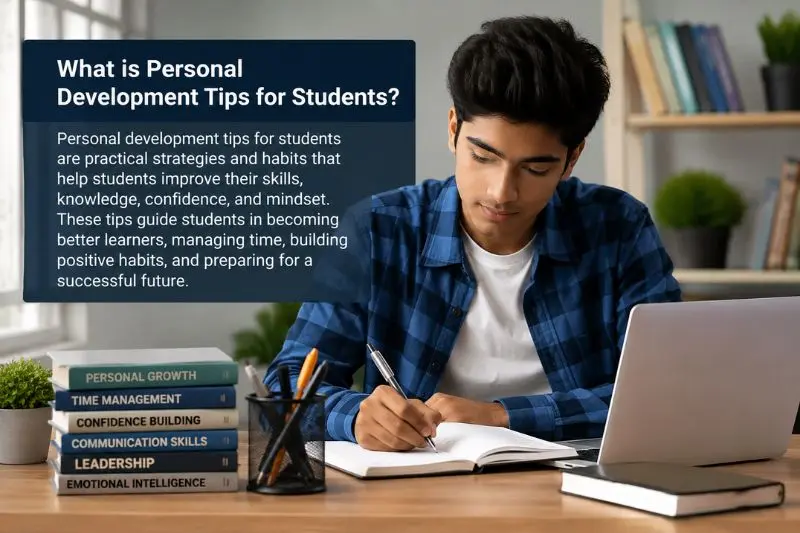
Personal development refers to the continuous process of improving your knowledge, skills, habits, mindset, and overall personality. For students, personal development means becoming a better learner while also developing qualities that contribute to long-term success.
These improvements include:
- Building confidence
- Improving communication skills
- Developing leadership abilities
- Managing time effectively
- Setting meaningful goals
- Learning emotional intelligence
- Increasing productivity
- Becoming more disciplined
Personal development is not something you complete in a week or a month. Instead, it is a lifelong journey of learning, adapting, and growing through experiences.
For example, a student who practices public speaking regularly becomes more confident during presentations. Similarly, someone who learns time management can balance studies, hobbies, and family responsibilities more efficiently.
Why is Personal Development Tips for Students Important?
Personal development plays a vital role in helping students prepare for both academic and professional life.
Here are several reasons why it matters:
Improves Academic Performance
Students with better study habits and discipline usually perform better in exams and assignments.
Builds Self-Confidence
Confidence helps students participate in class discussions, presentations, interviews, and extracurricular activities.
Develops Better Decision-Making Skills
Personal growth teaches students to evaluate situations carefully before making important decisions.
Reduces Stress
Learning stress management techniques helps students stay calm during exams and deadlines.
Enhances Career Opportunities
Employers value communication, leadership, teamwork, and problem-solving skills as much as technical knowledge.
Creates Lifelong Learning Habits
Students who continuously improve themselves remain competitive throughout their careers.
Detailed Step-by-Step Guide
Step 1: Set Clear Goals
Successful students know exactly what they want to achieve.
Use SMART goals:
- Specific
- Measurable
- Achievable
- Relevant
- Time-bound
Instead of saying:
“I want better grades.”
Say:
“I will improve my mathematics score from 70% to 85% within four months.”
Writing goals down increases commitment and motivation.
Step 2: Improve Time Management
Time is one of the most valuable resources for students.
Effective strategies include:
- Create a daily schedule.
- Prioritize important tasks.
- Break large assignments into smaller sections.
- Avoid procrastination.
- Use calendars or planners.
Example:
Study for one hour daily instead of cramming before exams.
Step 3: Develop Positive Habits
Small habits eventually create big results.
Useful habits include:
- Reading daily
- Exercising regularly
- Sleeping 7–9 hours
- Drinking enough water
- Reviewing notes every evening
- Keeping your study space organized
Consistency matters more than perfection.
Step 4: Improve Communication Skills
Communication is essential for both academic and career success.
Practice by:
- Speaking confidently
- Listening carefully
- Participating in discussions
- Asking thoughtful questions
- Giving presentations
Good communication also improves teamwork and relationships.
Step 5: Build Self-Confidence
Confidence grows through action.
Ways to improve confidence:
- Celebrate small achievements.
- Learn from mistakes.
- Practice public speaking.
- Maintain positive body language.
- Avoid comparing yourself with others.
Confidence is built gradually through experience.
Step 6: Learn Emotional Intelligence
Academic intelligence alone is not enough.
Students should learn to:
- Recognize emotions
- Manage stress
- Stay calm during pressure
- Understand others’ feelings
- Build healthy relationships
Emotional intelligence contributes to better teamwork and leadership
Step 7: Develop Critical Thinking
Instead of memorizing information, learn to analyze it.
Ask questions like:
- Why is this important?
- What evidence supports it?
- Are there alternative viewpoints?
Critical thinking improves learning and problem-solving abilities.
Step 8: Read Books Regularly
Books expand knowledge and improve vocabulary.
Recommended categories include:
- Self-improvement
- Leadership
- Psychology
- Productivity
- Biography
- Communication
Reading even 20 minutes daily can make a noticeable difference over time.
Step 9: Stay Physically Healthy
A healthy body supports a healthy mind.
Maintain good health by:
- Exercising regularly
- Eating nutritious meals
- Drinking enough water
- Sleeping consistently
- Limiting junk food
Physical wellness directly impacts concentration and memory.
Step 10: Learn New Skills
Today’s students should continuously learn beyond textbooks.
Useful skills include:
- Microsoft Office
- Graphic design
- Coding
- Public speaking
- Financial literacy
- Writing
- Digital marketing
- Foreign languages
These skills increase career opportunities.
Step 11: Practice Self-Reflection
Take a few minutes each week to evaluate yourself.
Ask questions like:
- What went well this week?
- What mistakes did I make?
- What should I improve?
- What goals should I focus on next?
Reflection accelerates personal growth.
Step 12: Build a Positive Network
The people around you influence your mindset.
Choose friends who:
- Encourage learning
- Motivate improvement
- Respect your goals
- Support your ambitions
Positive relationships create a better environment for success.
Benefits of Personal Development Tips for Students
Personal development offers numerous long-term advantages.
- Improves academic performance
- Builds confidence
- Enhances communication skills
- Develops leadership abilities
- Increases motivation
- Improves problem-solving skills
- Encourages self-discipline
- Strengthens emotional intelligence
- Reduces stress
- Creates better study habits
- Improves decision-making
- Increases productivity
- Helps achieve career goals
- Develops lifelong learning habits
- Improves relationships with others
Disadvantages / Risks
Although personal development is highly beneficial, students should be aware of certain risks.
- Setting unrealistic goals may cause disappointment.
- Comparing progress with others can reduce confidence.
- Trying to improve too many areas at once may lead to burnout.
- Following every productivity trend can create confusion.
- Ignoring mental health while chasing success may increase stress.
- Expecting overnight results often leads to frustration.
The key is maintaining balance and focusing on steady progress.
Common Mistakes to Avoid
Many students unknowingly slow their own personal growth.
Avoid these common mistakes:
Lack of Clear Goals
Without direction, improvement becomes difficult to measure.
Waiting for Motivation
Successful students rely on discipline rather than temporary motivation.
Ignoring Physical Health
Poor sleep and unhealthy eating reduce focus and productivity.
Fear of Failure
Mistakes provide valuable learning experiences.
Procrastination
Delaying important tasks increases stress and lowers performance.
Comparing Yourself Constantly
Everyone progresses at a different pace.
Avoiding Feedback
Constructive criticism helps identify areas for improvement.
Learning Without Applying
Knowledge becomes valuable only when put into practice.
FAQs
What are the best personal development tips for students?
The best personal development tips for students include setting goals, managing time effectively, improving communication skills, reading regularly, practicing self-discipline, exercising, learning new skills, and maintaining a positive mindset.
Why is personal development important for students?
Personal development helps students improve academically, build confidence, develop leadership skills, reduce stress, and prepare for successful careers.
How can students improve self-confidence?
Students can improve confidence by practicing regularly, celebrating small achievements, developing new skills, speaking in public, and learning from mistakes instead of fearing them.
How long does personal development take?
Personal development is a lifelong journey. However, students often notice positive changes within a few weeks of practicing consistent habits.
Can personal development improve academic performance?
Yes. Better time management, discipline, focus, and effective study habits directly contribute to improved academic performance.
Which daily habits support personal development?
Helpful daily habits include reading, exercising, journaling, planning the day, reviewing notes, practicing gratitude, getting enough sleep, and learning something new.
Expert Tips & Bonus Points
Want to accelerate your personal growth? Follow these expert recommendations:
- Read at least ten pages of a good book every day.
- Keep a personal journal to track your progress.
- Learn one new skill every six months.
- Practice public speaking whenever possible.
- Spend less time on unnecessary social media.
- Create weekly and monthly goals.
- Learn basic financial management early.
- Build meaningful relationships with mentors and teachers.
- Take online courses to expand your knowledge.
- Develop a growth mindset by viewing challenges as opportunities.
- Reward yourself after completing important milestones.
- Stay curious and ask questions often.
- Accept constructive criticism with an open mind.
- Focus on consistency rather than perfection.
- Remember that small improvements every day lead to extraordinary long-term results.
Conclusion
Personal development is one of the most valuable investments a student can make because it shapes not only academic success but also the quality of life and future career opportunities. While earning good grades is important, true success comes from becoming a well-rounded individual who possesses confidence, discipline, emotional intelligence, effective communication skills, and the ability to adapt to new challenges. These qualities cannot be developed overnight, but they grow steadily through consistent effort, self-awareness, and a genuine commitment to lifelong learning. By following practical personal development tips for students, anyone can unlock their full potential and build a strong foundation for long-term success.
One of the biggest misconceptions among students is that personal growth requires major life changes or expensive training programs. In reality, meaningful improvement often begins with simple daily habits. Waking up on time, planning your day, reading a few pages of a book, exercising regularly, practicing gratitude, and reviewing your progress each evening may seem like small actions, but when repeated consistently, they create powerful results. These habits improve focus, strengthen discipline, reduce stress, and gradually transform the way you approach both academic and personal challenges.
Another important lesson is that personal development is a journey unique to every individual. Every student has different strengths, weaknesses, learning styles, and goals. Comparing your progress to someone else’s can lead to unnecessary pressure and disappointment. Instead, focus on becoming a better version of yourself than you were yesterday. Celebrate small achievements, learn from mistakes without being discouraged, and remember that every setback is an opportunity to gain valuable experience. Growth rarely follows a straight path, but persistence always pays off in the long run.
Developing essential life skills should also be viewed as an ongoing priority. Time management, communication, leadership, teamwork, critical thinking, and problem-solving abilities are just as valuable as academic knowledge. These skills not only help students perform better in school or university but also prepare them for interviews, workplaces, entrepreneurship, and leadership roles. Employers increasingly seek individuals who can collaborate effectively, think creatively, and adapt quickly to changing environments. Investing in these skills today creates opportunities that extend far beyond graduation.
Maintaining physical and mental well-being is another key aspect of successful personal development. A healthy body supports a healthy mind, making it easier to concentrate, retain information, and stay motivated. Regular exercise, nutritious meals, adequate sleep, and healthy ways of managing stress should never be overlooked. Students who take care of their health are often more energetic, productive, and emotionally resilient, allowing them to perform at their best both inside and outside the classroom.
It is equally important to embrace a growth mindset throughout your educational journey. Instead of fearing failure, view every challenge as a chance to improve your knowledge and skills. Successful people are not those who never fail—they are those who continue learning, adapting, and moving forward despite setbacks. Every mistake teaches a valuable lesson, and every challenge helps build resilience. This mindset transforms obstacles into stepping stones toward greater achievements.
Building positive relationships also plays a significant role in personal growth. Surrounding yourself with supportive friends, inspiring teachers, mentors, and like-minded individuals creates an environment that encourages learning and motivation. Positive influences can provide guidance during difficult times, offer constructive feedback, and inspire you to pursue higher goals. At the same time, learning to communicate respectfully, collaborate with others, and show empathy strengthens both personal and professional relationships.
As technology and industries continue to evolve, lifelong learning has become more important than ever. Students who continuously develop new skills, stay curious, and remain open to learning will always have an advantage. Whether it’s improving digital skills, learning a new language, developing financial literacy, or exploring creative hobbies, every new skill adds value to your personal and professional life. The willingness to keep learning ensures that you remain adaptable in a rapidly changing world.
Ultimately, personal development is not about becoming perfect—it is about making consistent progress. Every positive choice, every productive habit, and every lesson learned contributes to your growth. The journey may require patience and dedication, but the rewards are well worth the effort. By applying these personal development tips for students consistently, you can improve your academic performance, strengthen your confidence, develop meaningful relationships, and prepare yourself for future success in every area of life.
Remember that your future is shaped by the decisions you make today. Start with one small improvement, stay committed to your goals, and trust the process of continuous learning. Over time, those small daily efforts will become powerful achievements, helping you build not only a successful career but also a fulfilling, balanced, and purposeful life. Personal development is a lifelong journey, and there is no better time to begin than right now.