
Introduction
Success is rarely the result of luck alone. More often, it comes from consistent actions repeated over time. Whether your goal is to improve your health, grow your career, earn better grades, or build a successful business, self-discipline plays a vital role. While motivation can help you get started, it is discipline that keeps you moving forward when motivation fades.
Many people believe that self-discipline is something people are born with. In reality, it is a skill that anyone can develop through practice and patience. Small daily habits gradually become routines, and these routines shape your future. The good news is that you do not need to make huge changes overnight. Simple, consistent actions often create the biggest results.
Developing self-discipline habits that work requires commitment, self-awareness, and the willingness to improve one step at a time. There will be challenges, distractions, and setbacks along the way. However, every small victory strengthens your confidence and makes the next step easier.
In this guide, you will learn what self-discipline is, why it matters, and how to build practical habits that truly work. These proven strategies are suitable for beginners as well as individuals who want to strengthen their existing routines.
What is Self-Discipline Habits That Work?
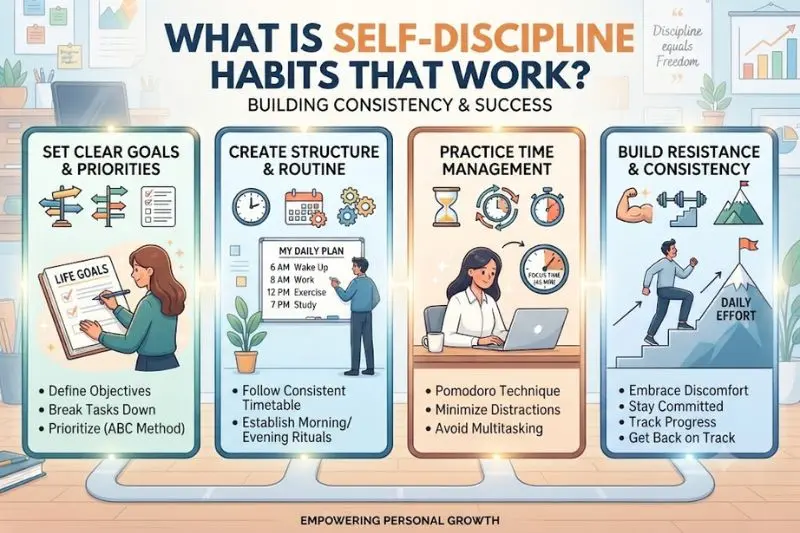
Self-discipline refers to the ability to control your actions, emotions, and decisions so that you stay focused on your long-term goals instead of giving in to short-term temptations. It is the practice of doing what needs to be done, even when you do not feel like doing it.
Self-discipline habits that work are practical daily routines that help you stay consistent, organized, and committed to your goals. Instead of relying on motivation alone, these habits create systems that encourage positive behavior every day.
For example:
- Waking up at the same time each morning
- Planning your day before work begins
- Exercising regularly
- Limiting social media during work hours
- Reading for personal growth every day
- Completing important tasks before entertainment
Over time, these habits become automatic, making success easier to achieve.
Why is Self-Discipline Important?

Self-discipline is one of the most valuable life skills because it affects nearly every area of life. Without discipline, even the best plans often fail. With discipline, average talent can produce outstanding results.
Here are some reasons why self-discipline is important:
- Helps you achieve long-term goals.
- Increases productivity and efficiency.
- Reduces procrastination.
- Improves decision-making skills.
- Builds confidence through consistent progress.
- Creates healthier daily routines.
- Strengthens emotional control during stressful situations.
- Encourages financial responsibility.
- Supports better relationships through reliability.
- Makes personal growth a lifelong habit.
People who consistently practice self-discipline habits that work often experience greater success because they focus on progress rather than perfection.
Step-by-Step Guide to Building Self-Discipline Habits That Work
Step 1: Define Clear and Specific Goals
Discipline becomes much easier when you know exactly what you are working toward. Vague goals such as “I want to be successful” often lead to confusion. Instead, create goals that are specific and measurable.
For example:
Instead of saying:
“I want to get fit.”
Say:
“I will exercise for 30 minutes five days a week.”
Instead of:
“I want to save money.”
Say:
“I will save $100 every month.”
Clear goals provide direction and make it easier to track your progress.
Step 2: Start with Small Daily Habits
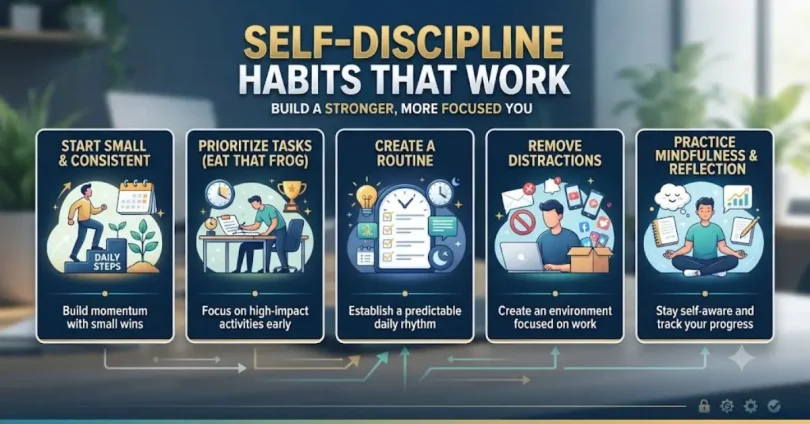
Many people fail because they try to change everything at once. Lasting discipline develops through small, manageable actions.
Examples include:
- Read five pages every day.
- Walk for ten minutes after dinner.
- Drink more water.
- Wake up fifteen minutes earlier.
- Spend ten minutes organizing your workspace.
These small wins build confidence and encourage consistency.
Step 3: Create a Daily Routine
Successful people rarely rely on motivation alone. Instead, they follow routines that reduce the need for constant decision-making.
A productive daily routine might include:
- Wake up at the same time.
- Exercise or stretch.
- Eat a healthy breakfast.
- Review daily goals.
- Complete your most important task first.
- Take scheduled breaks.
- Review accomplishments before bedtime.
When repeated consistently, routines become automatic habits.
Step 4: Remove Distractions
Distractions are one of the biggest obstacles to discipline. Even a few minutes of distraction can reduce productivity significantly.
Some effective ways to reduce distractions include:
- Turn off unnecessary phone notifications.
- Keep your workspace clean.
- Use website blockers during work sessions.
- Schedule specific times for checking email.
- Put your phone away while studying.
Creating a distraction-free environment makes it easier to stay focused.
Step 5: Practice Delayed Gratification
One of the strongest signs of discipline is choosing long-term rewards over immediate pleasure.
For example:
- Finish your work before watching television.
- Save money before making unnecessary purchases.
- Complete your workout before relaxing.
- Study before playing video games.
Each time you delay instant gratification, your self-control becomes stronger.
Step 6: Track Your Progress
Monitoring your habits helps you stay accountable. Keeping track of your progress allows you to identify what works and what needs improvement.
Simple tracking methods include:
- A habit tracker
- A daily journal
- A calendar
- A productivity app
- Weekly progress reviews
Even checking off completed tasks each day provides motivation to continue.
Step 7: Build Consistency Instead of Chasing Perfection
One of the biggest myths about self-discipline is that you must perform perfectly every day. In reality, consistent effort matters far more than perfection. Missing one workout, one study session, or one productive day does not erase your progress. What matters is getting back on track as quickly as possible.
For example, if your goal is to read every day and you miss one evening, simply continue the next day instead of giving up. Long-term success comes from repeating positive actions over weeks, months, and years.
Ways to stay consistent include:
- Focus on progress rather than perfection.
- Celebrate small achievements.
- Learn from setbacks instead of fearing them.
- Build habits gradually.
- Keep showing up even when motivation is low.
Consistency transforms ordinary efforts into extraordinary results.
Step 8: Develop Strong Time Management Skills
Time is one of your most valuable resources. People with strong self-discipline understand how to use it wisely instead of wasting it on unnecessary distractions.
Effective time management starts with planning your day in advance. Prioritize important tasks and avoid spending too much time on activities that do not support your goals.
Helpful time management strategies include:
- Create a daily to-do list.
- Prioritize high-impact tasks.
- Set realistic deadlines.
- Break large projects into smaller tasks.
- Schedule regular breaks to maintain focus.
For example, instead of trying to write an entire report in one sitting, divide it into research, outlining, drafting, editing, and proofreading. Smaller tasks feel more manageable and reduce procrastination.
Step 9: Learn to Say No
Many people lose discipline because they struggle to refuse distractions or unnecessary commitments. Every time you say yes to something unimportant, you may be saying no to your personal goals.
Learning to say no respectfully helps you protect your time and energy.
For example:
- Declining unnecessary meetings.
- Limiting time spent on social media.
- Avoiding activities that interfere with your priorities.
- Turning down commitments that create unnecessary stress.
Saying no is not selfish. It is a way of respecting your goals and maintaining focus.
Step 10: Reward Yourself for Progress
Positive reinforcement encourages long-term habit formation. Rewarding yourself after achieving milestones helps maintain motivation without undermining discipline.
Healthy rewards include:
- Watching your favorite movie after completing a project.
- Enjoying a relaxing evening after a productive week.
- Buying a book you’ve wanted after reaching a savings goal.
- Taking a short trip after accomplishing a major objective.
Avoid rewards that contradict your goals. For example, rewarding healthy eating with excessive junk food may weaken your progress.
Benefits of Self-Discipline Habits That Work
Developing effective self-discipline habits can improve every area of life. Some of the biggest benefits include:
- Increased productivity and efficiency.
- Better focus on important tasks.
- Reduced procrastination.
- Greater confidence through consistent achievement.
- Improved physical and mental health.
- Better financial management.
- Stronger decision-making skills.
- Reduced stress caused by poor planning.
- Increased resilience during difficult situations.
- Better work-life balance.
- More successful relationships through reliability.
- Greater chances of achieving long-term goals.
People who practice self-discipline habits that work often discover that success becomes a natural result of their daily routines rather than occasional bursts of motivation.
Disadvantages and Risks
Although self-discipline is highly beneficial, it can become unhealthy if taken to extremes. Maintaining balance is essential.
Potential disadvantages include:
- Becoming overly rigid with routines.
- Feeling guilty after small mistakes.
- Ignoring the need for rest and recovery.
- Increased stress from unrealistic expectations.
- Difficulty adapting to unexpected situations.
- Risk of burnout from excessive work.
- Reduced flexibility in personal relationships.
The key is to remain disciplined while also allowing room for rest, enjoyment, and personal growth.
Common Mistakes to Avoid
Many people struggle with discipline because they unknowingly make common mistakes. Recognizing these mistakes can help you avoid unnecessary setbacks.
1. Setting Unrealistic Goals
Trying to change your entire lifestyle overnight usually leads to disappointment. Start with achievable goals and gradually increase the challenge.
2. Depending Only on Motivation
Motivation naturally rises and falls. Successful people rely on routines and habits rather than waiting to feel inspired.
3. Ignoring Small Habits
Small daily actions may seem insignificant, but they create powerful long-term results. Never underestimate their impact.
4. Trying to Do Too Much
Taking on too many responsibilities at once can lead to exhaustion. Focus on a few important habits before adding more.
5. Giving Up After One Mistake
Everyone experiences setbacks. Missing one day does not mean you have failed. Continue where you left off instead of starting over repeatedly.
6. Comparing Yourself to Others
Your journey is unique. Comparing your progress with someone else’s can reduce motivation and confidence. Measure your success against your own previous performance.
7. Neglecting Physical Health
Poor sleep, unhealthy eating, and lack of exercise reduce your ability to stay disciplined. Taking care of your body supports better focus and decision-making.
FAQs
What are the best self-discipline habits for beginners?
Beginners should start with simple habits that are easy to maintain. Examples include waking up at the same time every day, making your bed, exercising for 20–30 minutes, planning your daily tasks, limiting social media use, and reading for at least 15 minutes. These small habits create a strong foundation for long-term success.
How long does it take to build self-discipline?
There is no fixed timeline because everyone is different. Some habits may feel natural within a few weeks, while others take several months of consistent practice. The key is to focus on daily progress rather than expecting immediate results.
Can self-discipline be learned?
Yes. Self-discipline is a skill, not a personality trait. Like any other skill, it improves with regular practice. By setting clear goals, following routines, and staying consistent, anyone can develop stronger self-discipline over time.
What is the difference between motivation and self-discipline?
Motivation is the desire to take action, while self-discipline is the ability to continue taking action even when motivation disappears. Motivation helps you start, but discipline helps you finish.
Why do people lose self-discipline?
People often lose discipline because of unrealistic expectations, poor planning, constant distractions, lack of sleep, stress, or trying to change too many habits at once. Creating a realistic routine and focusing on one improvement at a time makes it easier to stay disciplined.
How can I stay disciplined every day?
You can stay disciplined by creating a daily schedule, setting clear priorities, tracking your progress, avoiding distractions, getting enough sleep, exercising regularly, and reviewing your goals every morning. Consistency is more important than perfection.
Can self-discipline improve mental health?
Yes. Healthy self-discipline can reduce stress, improve confidence, increase emotional control, and provide a greater sense of accomplishment. Maintaining balanced routines often leads to improved overall well-being.
Is self-discipline important for career success?
Absolutely. Employers value individuals who are reliable, organized, punctual, and capable of completing tasks without constant supervision. Strong self-discipline improves productivity, leadership skills, and professional growth.
Expert Tips & Bonus Points
If you want to master self-discipline habits that work, these expert strategies can help you stay on track and continue improving:
- Start each morning by identifying your three most important tasks.
- Use the “two-minute rule.” If a task takes less than two minutes, complete it immediately.
- Prepare your workspace the night before to reduce morning distractions.
- Keep a journal to reflect on your daily achievements and areas for improvement.
- Build one new habit at a time instead of trying to change everything at once.
- Surround yourself with positive, disciplined people who inspire you to improve.
- Replace negative self-talk with constructive encouragement.
- Schedule regular breaks to avoid burnout and maintain energy.
- Review your goals weekly and adjust your action plan when necessary.
- Celebrate milestones, no matter how small, to reinforce positive behavior.
Bonus Point
Remember that discipline is not about being perfect. It is about making better choices more often than not. Every positive decision, no matter how small, contributes to your future success. Over time, these small victories create lasting habits that shape a more productive and fulfilling life.
Conclusion
Building lasting success does not require extraordinary talent or endless motivation. Instead, it depends on the small choices you make every day. Developing self-discipline habits that work allows you to stay focused on your goals, overcome distractions, and make steady progress regardless of challenges.
The journey toward greater self-discipline begins with simple actions. Setting clear goals, creating daily routines, managing your time wisely, and remaining consistent are habits that produce meaningful results over time. While setbacks are inevitable, they should be viewed as learning opportunities rather than reasons to quit. Every day offers a new chance to strengthen your habits and move closer to your objectives.
It is also important to remember that discipline should be balanced with self-care. Taking time to rest, reflect, and celebrate your achievements helps maintain long-term motivation and prevents burnout. Sustainable success comes from creating habits that fit naturally into your lifestyle.
Whether your goal is to improve your career, health, finances, education, or personal development, strong self-discipline provides the foundation for lasting achievement. Begin with one small habit today, stay committed to your routine, and trust the process. Over time, your consistent efforts will transform into remarkable results, proving that success is built one disciplined decision at a time.