
Introduction
Artificial intelligence is no longer just a futuristic idea; it is actively reshaping how students learn, how teachers teach, and how educational systems operate. From personalized learning apps to intelligent tutoring systems, AI is making education more adaptive, accessible, and efficient than ever before.
Today, classrooms are no longer limited to textbooks and chalkboards. Digital platforms powered by AI can analyze student performance in real time, identify weak areas, and suggest tailored learning paths. This shift is especially important in a world where students learn at different speeds and have different learning styles.
Moreover, AI is helping educators reduce workload by automating grading, attendance tracking, and administrative tasks. This gives teachers more time to focus on meaningful interaction with students.
In this article, we will explore how AI is transforming education, why it matters, its benefits and risks, and how students and educators can use it effectively. Whether you are a beginner or someone familiar with digital learning tools, this guide will give you a clear understanding of the future of education powered by artificial intelligence.
What is How AI Is Transforming Education?
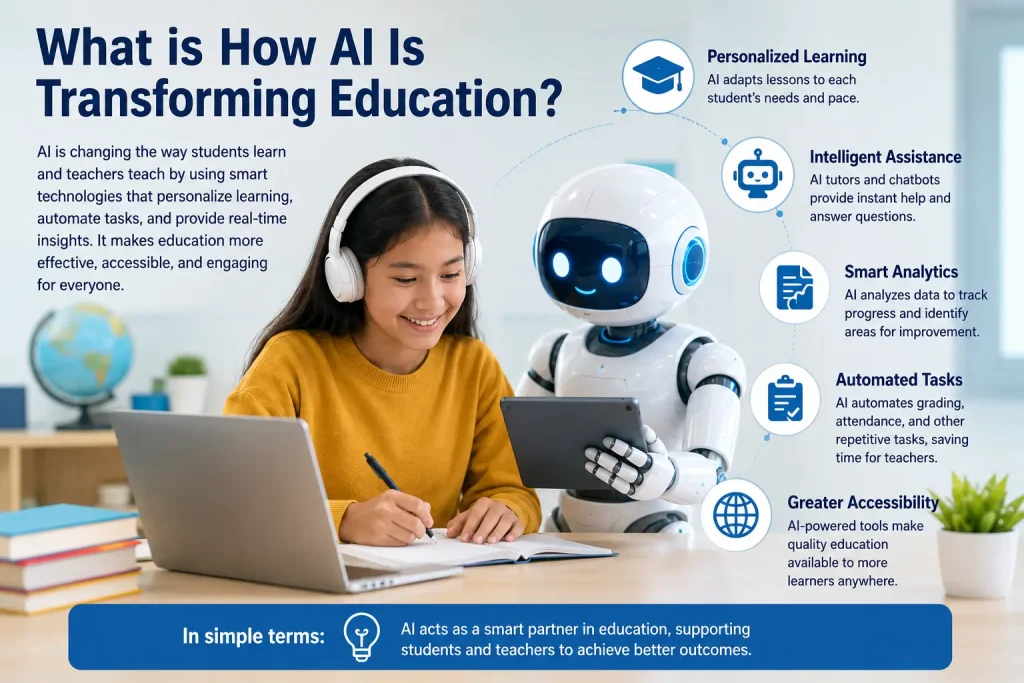
How AI is transforming education refers to the integration of intelligent technologies into learning systems to improve teaching, learning, and educational management. These systems use machine learning, data analysis, and automation to create smarter and more personalized learning experiences.
AI in education is not about replacing teachers. Instead, it supports them by offering tools that enhance productivity and improve student outcomes. For example, AI-powered platforms can detect when a student is struggling with a topic and immediately provide additional practice or explanations.
Key areas where AI is used in education include:
- Personalized learning platforms
- Virtual tutors and chatbots
- Automated grading systems
- Smart content creation
- Language learning apps
- Predictive analytics for student performance
In simple terms, AI acts like a digital assistant that helps both students and teachers make learning more effective and less stressful.
Why How AI Is Transforming Education Is Important?
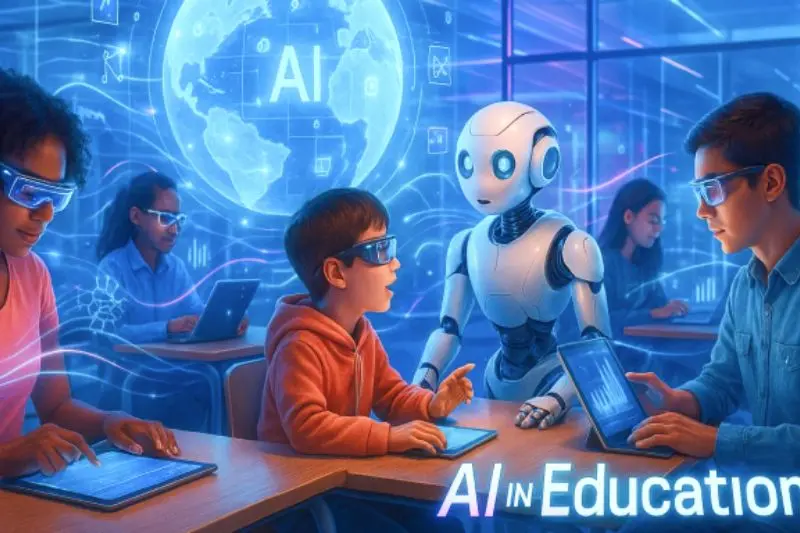
The importance of AI in education lies in its ability to solve long-standing challenges in traditional learning systems. Many classrooms follow a one-size-fits-all approach, which does not work for every student. AI changes this by adapting learning to individual needs.
One of the biggest advantages is accessibility. Students from remote or underprivileged areas can access high-quality learning materials through AI-powered platforms. This reduces the education gap across regions.
Another key reason is efficiency. Teachers often spend hours on repetitive tasks like grading assignments or preparing worksheets. AI can automate these tasks, allowing educators to focus more on teaching and mentoring.
Additionally, AI provides real-time feedback, which is crucial for faster learning. Instead of waiting for exam results, students can immediately understand their mistakes and improve.
Overall, AI is important because it makes education more personalized, inclusive, and efficient, preparing students for a future driven by technology.
Detailed Step-by-Step Guide
Step 1: Data Collection and Student Profiling
AI systems begin by collecting data on student behavior, performance, and learning patterns. This includes quiz scores, assignment completion rates, and interaction with learning materials.
The system then builds a profile for each student to understand their strengths and weaknesses.
Step 2: Personalized Learning Paths
Once the data is analyzed, AI creates customized learning paths. Students struggling with math may receive additional practice problems, while advanced learners get more challenging content.
This ensures that every student learns at their own pace.
Step 3: Smart Content Delivery
AI delivers content in multiple formats such as videos, quizzes, and interactive exercises. This helps students with different learning styles—visual, auditory, or kinesthetic.
It also keeps learners more engaged compared to traditional textbooks.
Step 4: Real-Time Feedback System
Instead of waiting for teachers to grade assignments, AI provides instant feedback. It highlights mistakes and suggests improvements immediately.
This helps students learn faster and correct errors on the spot.
Step 5: Teacher Support and Automation
AI assists teachers by automating administrative tasks like grading, attendance tracking, and report generation. It also provides insights into student performance trends.
This allows teachers to focus more on personalized teaching.
Step 6: Continuous Improvement Through Machine Learning
AI systems continuously learn from new data. As students interact with the platform, the system becomes more accurate in predicting learning needs.
This ensures that education becomes more effective over time.
Benefits of How AI Is Transforming Education
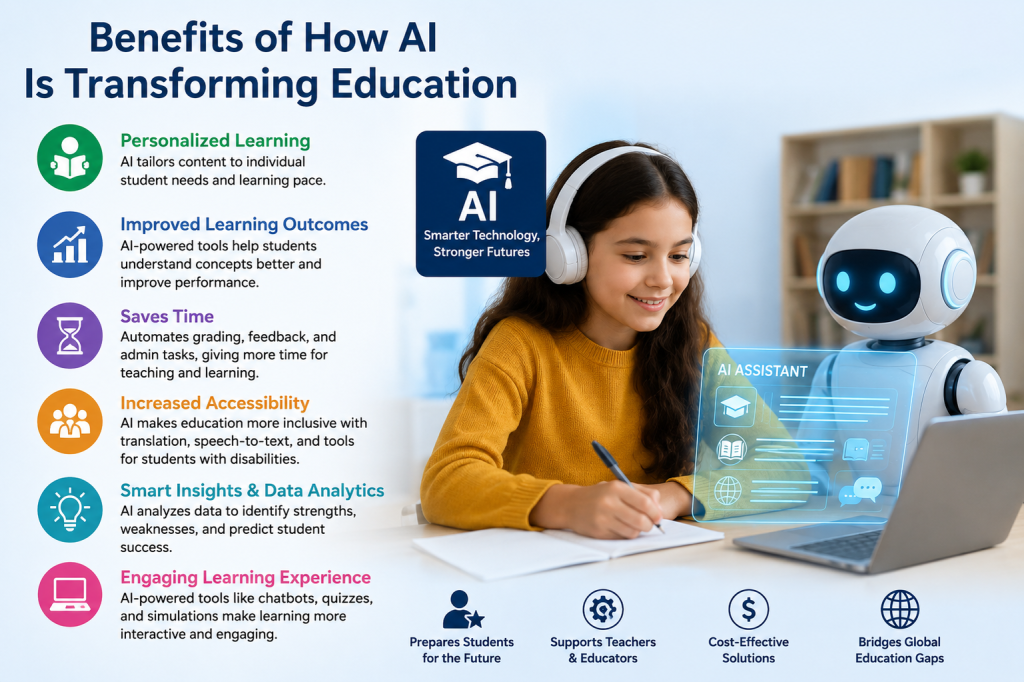
- Personalized learning experiences for every student
- Faster feedback and improved understanding
- Reduced workload for teachers
- Better accessibility for remote learners
- Increased student engagement through interactive tools
- Data-driven insights for improved teaching strategies
- Flexible learning environments available anytime
Disadvantages / Risks
- Overdependence on technology may reduce critical thinking
- Privacy concerns related to student data
- High implementation costs for schools
- Lack of human interaction in some learning environments
- Possible technical errors affecting learning experience
Common Mistakes to Avoid
- Relying completely on AI without teacher involvement
- Ignoring data privacy and security measures
- Using AI tools without proper training
- Overloading students with too much digital content
- Assuming AI replaces human teaching completely
How is AI changing the education system?
AI is making education more personalized, efficient, and accessible by adapting learning content to individual student needs.
Can AI replace teachers?
No, AI cannot replace teachers. It supports them by handling repetitive tasks and improving learning outcomes.
What are examples of AI in education?
Examples include virtual tutors, smart learning apps, automated grading systems, and adaptive learning platforms.
Is AI in education safe for students?
Yes, but it depends on proper data protection and ethical use of technology.
How does AI help struggling students?
AI identifies weak areas and provides extra practice and simplified explanations to help students improve.
What is the future of AI in education?
The future includes fully adaptive classrooms, AI tutors, and highly personalized learning systems.
Expert Tips & Bonus Points
- Use AI tools as a supplement, not a replacement for learning
- Combine traditional study methods with digital learning
- Focus on understanding concepts rather than memorization
- Encourage students to use AI for practice and revision
- Teachers should continuously learn new educational technologies
Conclusion
Artificial intelligence is transforming education in powerful and meaningful ways. It is making learning more personalized, accessible, and efficient for students across the world. By analyzing student behavior and adapting content in real time, AI ensures that no learner is left behind.
Teachers also benefit greatly from AI by reducing administrative workload and gaining deeper insights into student performance. This allows them to focus more on creativity, mentorship, and meaningful engagement in the classroom.
However, while AI offers many advantages, it must be used responsibly. Issues like data privacy, overdependence on technology, and reduced human interaction should be carefully managed.
Looking ahead, AI will continue to evolve and play an even greater role in education. From intelligent tutoring systems to fully adaptive learning environments, the future of education will be more dynamic than ever.
In the end, AI is not here to replace traditional education but to enhance it, making learning smarter, faster, and more inclusive for everyone.