
Introduction
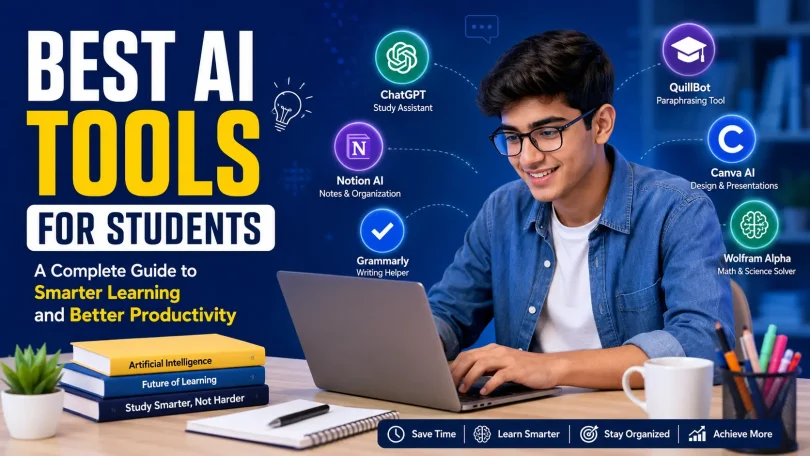
Technology has transformed the way students learn, complete assignments, and prepare for exams. Today, artificial intelligence is becoming an essential part of education, helping students study more efficiently while saving valuable time. The Best AI Tools for Students offer practical solutions for writing, research, note-taking, language learning, brainstorming, and productivity.
Instead of replacing learning, these tools enhance it by providing personalized assistance and faster access to information. Whether you are a high school student, a college learner, or someone taking online courses, AI-powered applications can help you stay organized and achieve better academic results.
However, using AI effectively requires balance. Students should rely on these tools to understand concepts, improve skills, and organize their work rather than simply copying answers. Responsible use encourages creativity, critical thinking, and independent learning.
This guide explores the Best AI Tools for Students, explains why they matter, outlines how to choose the right ones, and shares practical tips for maximizing their benefits. You’ll also discover the advantages, potential drawbacks, common mistakes to avoid, frequently asked questions, and expert recommendations for making AI a valuable study companion.
What Are the Best AI Tools for Students?
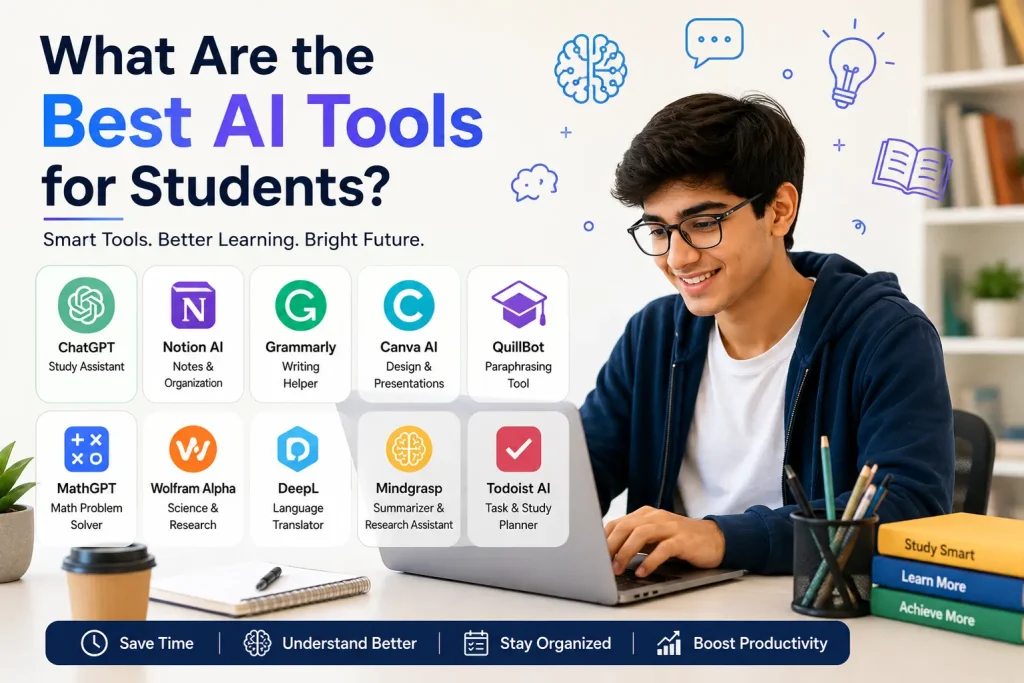
The Best AI Tools for Students are software applications that use artificial intelligence to simplify learning tasks and improve academic performance. These tools analyze information, generate suggestions, organize notes, summarize lengthy content, check grammar, create study plans, and assist with research.
Rather than replacing traditional learning methods, AI complements them by making educational tasks faster and more manageable.
Popular categories include:
- Writing and grammar assistants
- Research assistants
- Note-taking tools
- Language learning platforms
- Math problem solvers
- Productivity and planning apps
- Presentation creators
- Flashcard generators
- Coding assistants
- Study organizers
Each category addresses different student needs, making it easier to learn efficiently.
Why Are the Best AI Tools for Students Important?
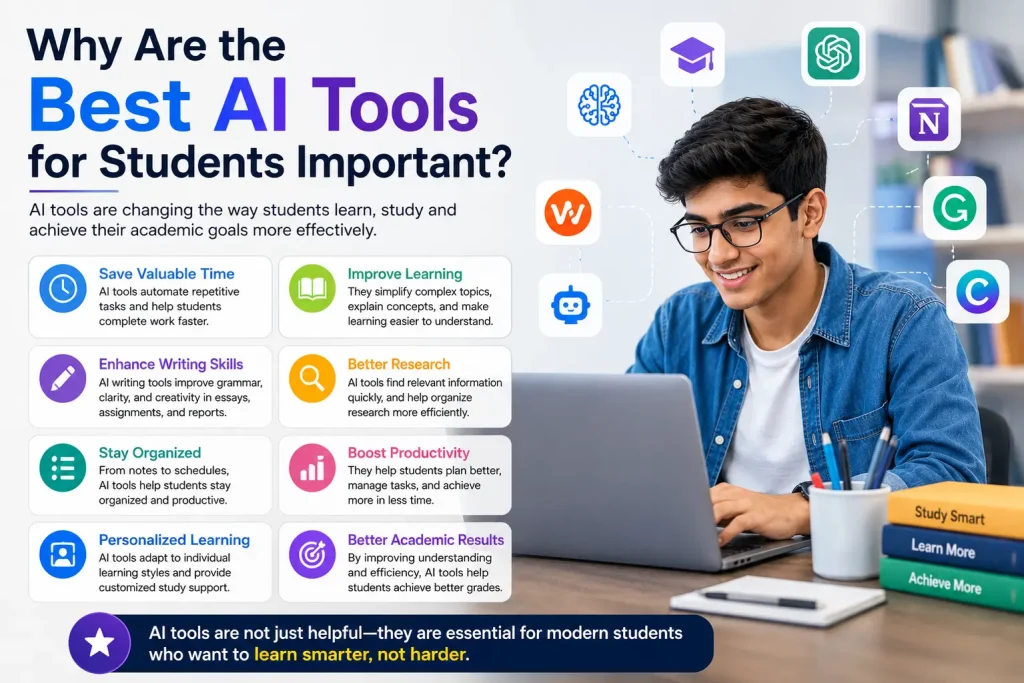
Artificial intelligence helps students focus more on understanding concepts instead of spending excessive time on repetitive tasks.
Some key reasons include:
- Saving time on research and note organization
- Improving writing quality
- Simplifying difficult subjects
- Encouraging better study habits
- Increasing productivity
- Supporting personalized learning
- Enhancing language and communication skills
- Helping students stay organized
As education becomes increasingly digital, these tools provide valuable support for learners of all levels.
Detailed Step-by-Step Guide
Step 1: Identify Your Learning Needs
Start by determining what challenges you face.
Ask yourself:
- Do you struggle with writing?
- Do you need help organizing notes?
- Are research assignments difficult?
- Do you want better study schedules?
Choosing tools based on your specific needs ensures better results.
Step 2: Select the Right Category
Different AI tools solve different problems.
Examples include:
- Writing assistance
- Research support
- Language improvement
- Math practice
- Presentation design
- Time management
Avoid downloading multiple apps that perform the same task.
Step 3: Learn the Features
Spend time exploring available features before relying on a tool.
Useful capabilities include:
- Grammar correction
- Text summarization
- Citation assistance
- Flashcard creation
- Smart search
- Voice transcription
- Task reminders
Understanding these features helps maximize productivity.
Step 4: Use AI as a Learning Assistant
Always treat AI as a guide rather than a replacement for studying.
Read explanations carefully.
Take notes in your own words.
Practice solving problems independently before checking AI-generated suggestions.
This approach strengthens long-term learning.
Step 5: Verify Information
Although AI tools are helpful, they can occasionally provide outdated or inaccurate information.
Always verify:
- Statistics
- Dates
- Scientific facts
- Historical events
- Mathematical solutions
- Academic references
Cross-checking information improves accuracy.
Step 6: Organize Study Materials
Many AI-powered platforms help organize notes automatically.
Create folders for:
- Lectures
- Assignments
- Projects
- Revision notes
- Practice questions
A well-organized study system reduces stress before exams.
Step 7: Improve Writing Skills
Writing assistants help students:
- Fix grammar mistakes
- Improve sentence structure
- Enhance vocabulary
- Increase readability
- Maintain professional tone
Instead of accepting every suggestion automatically, understand why corrections are recommended.
Step 8: Build Better Study Habits
Consistency matters more than studying for long hours.
Use AI to:
- Schedule study sessions
- Track progress
- Set reminders
- Break large projects into smaller tasks
Better planning leads to improved academic performance.
Benefits of the Best AI Tools for Students
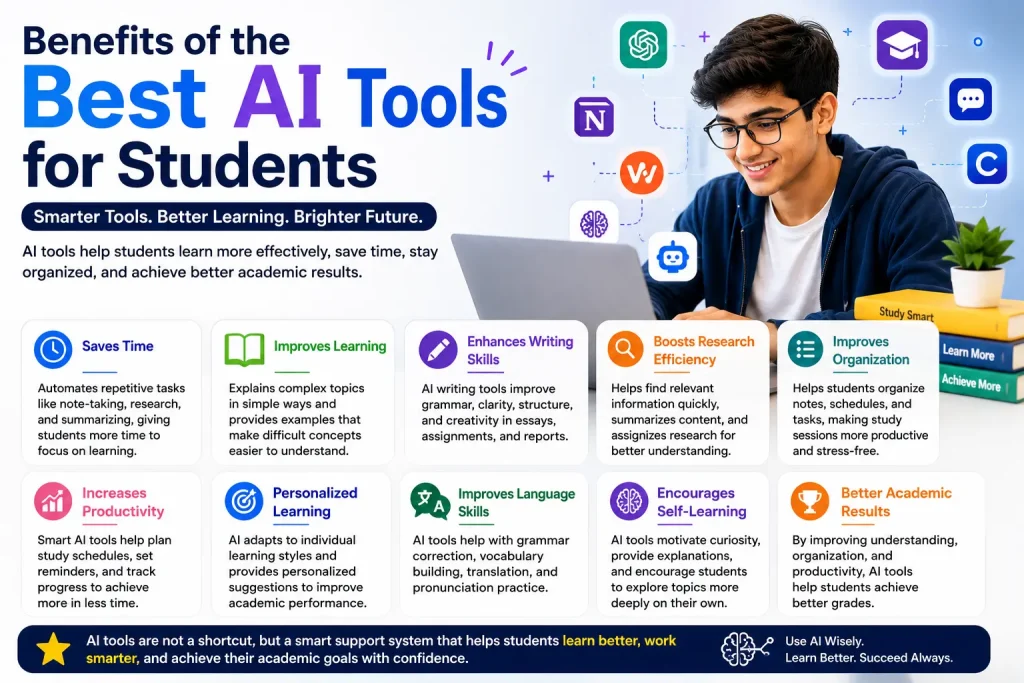
Using AI responsibly offers numerous advantages.
- Saves valuable study time.
- Improves writing quality.
- Helps organize notes efficiently.
- Supports personalized learning.
- Simplifies difficult concepts.
- Increases research efficiency.
- Enhances language skills.
- Encourages better time management.
- Boosts productivity.
- Creates effective study schedules.
- Improves classroom preparation.
- Reduces repetitive manual work.
- Assists with brainstorming ideas.
- Supports online learning.
- Makes revision more efficient.
Disadvantages and Risks
Despite their advantages, AI tools also have limitations.
- Overdependence can reduce critical thinking.
- Some information may be inaccurate.
- Premium features often require subscriptions.
- Privacy concerns may exist.
- Internet access is usually necessary.
- Students may misuse AI for plagiarism.
- Excessive automation can reduce creativity.
- Not every subject receives equally accurate assistance.
Responsible use minimizes these risks.
Common Mistakes to Avoid
Many students fail to gain the full benefits of AI because they use it incorrectly.
Avoid these common mistakes:
- Copying AI-generated content without understanding it.
- Ignoring fact-checking.
- Using too many tools simultaneously.
- Depending entirely on automation.
- Skipping personal revision.
- Forgetting to cite sources when required.
- Using outdated applications.
- Ignoring privacy settings.
- Accepting every suggestion without evaluation.
- Neglecting traditional study methods.
Combining AI with active learning produces the best results.
What are the best AI tools for students?
The best AI tools are those that improve writing, research, note-taking, organization, language learning, productivity, and academic planning. The right choice depends on your educational goals and study habits.
Can AI improve academic performance?
Yes. AI can improve productivity, organization, writing quality, and research efficiency. However, students achieve the best results when they actively engage with the learning process instead of relying entirely on automation.
Are AI tools suitable for beginners?
Absolutely. Most modern AI applications feature simple interfaces designed for beginners. Students can gradually explore advanced features as they become more comfortable using the software.
Are free AI tools enough for students?
Many free versions provide valuable features for everyday learning. Premium plans usually offer advanced capabilities, but most students can complete regular academic tasks using free options.
Can AI replace teachers?
No. Teachers provide guidance, experience, emotional support, classroom interaction, and personalized feedback that AI cannot fully replace. AI works best as a supportive educational assistant.
How can students use AI responsibly?
Students should use AI to understand concepts, organize information, improve writing, and practice skills. They should avoid plagiarism, verify important information, and continue developing independent thinking.
Expert Tips & Bonus Points
To get the most value from the Best AI Tools for Students, follow these recommendations:
- Choose one primary tool for each task.
- Study concepts instead of memorizing answers.
- Review AI-generated suggestions carefully.
- Keep handwritten revision notes.
- Schedule daily study sessions.
- Practice without AI before exams.
- Verify important academic information.
- Protect your personal data.
- Update applications regularly.
- Combine AI learning with classroom instruction.
- Focus on building long-term skills.
- Use AI to increase efficiency rather than replace effort.
Students who combine technology with consistent practice usually achieve stronger academic outcomes.
Conclusion
Artificial intelligence has become a valuable educational companion for students seeking smarter and more efficient ways to learn. The Best AI Tools for Students simplify everyday academic tasks, including writing, research, organization, language improvement, and study planning. By reducing repetitive work, these tools allow learners to spend more time understanding concepts and developing practical skills.
However, success depends on responsible usage. AI should support learning instead of replacing independent thinking or personal effort. Students who verify information, practice regularly, and apply critical thinking gain the greatest long-term benefits. Combining AI-powered assistance with traditional study methods creates a balanced approach that encourages deeper understanding and stronger academic performance.
As technology continues to evolve, students who learn how to use AI wisely will be better prepared for future educational and professional opportunities. Whether you are beginning your academic journey or looking to improve existing study habits, selecting the right AI tools can boost productivity, reduce stress, and make learning more enjoyable. Focus on continuous improvement, stay curious, and use artificial intelligence as a reliable partner in achieving your educational goals.